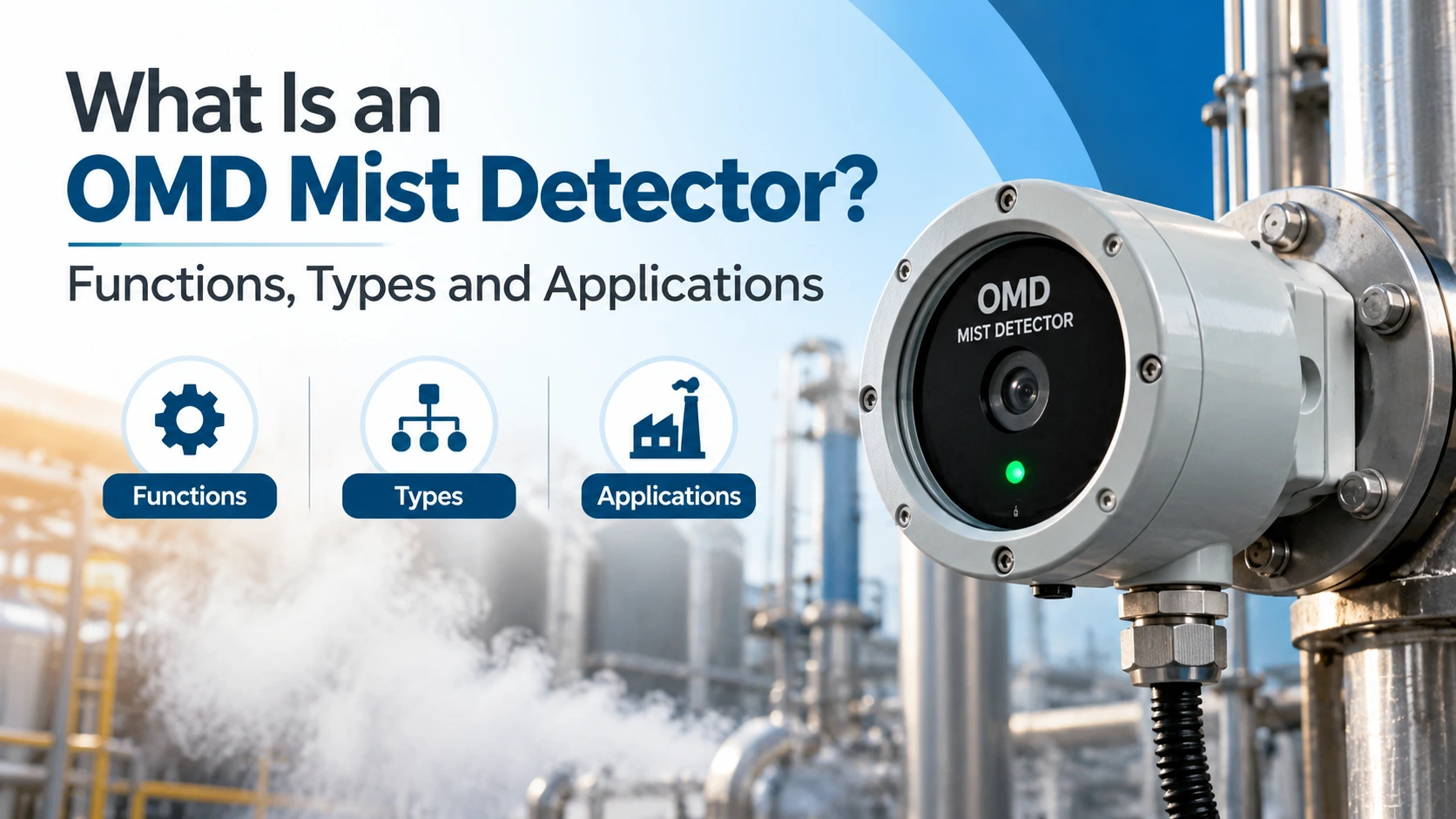
In large marine diesel engines, lubricating oil can escape from damaged components, overheated bearings or other mechanical faults. An OMD mist detector helps identify oil mist inside the engine before conditions develop into a more serious hazard. When the oil becomes a fine mist, it may create conditions that increase the risk of a crankcase explosion.
The difficulty is that a developing fault may not produce obvious external signs. An engine can continue running while an internal component overheats or lubrication conditions deteriorate. An oil mist detector gives the crew an additional way to recognise abnormal conditions and respond before the situation worsens.
However, not every oil mist detection system monitors the same space or works in the same way. Understanding the equipment’s operating principle, alarm functions and intended application helps shipowners, marine engineers and purchasing teams select the right solution for their vessel.
How an OMD Mist Detector Identifies Engine Hazards

A mist detector monitors oil mist concentrations in designated engine spaces. Depending on the equipment design, it may sample air from several crankcase compartments and compare the readings against configured limits or other detection criteria.
When the system identifies an abnormal condition, it alerts the crew through a local indication, an alarm panel or an integrated engine monitoring system. The exact response depends on the detector model, its configuration and the vessel’s control arrangements.
The equipment does not identify every possible engine fault, nor does it guarantee it will prevent an explosion. Its purpose is to provide an early warning of conditions associated with a potential hazard, allowing the crew to investigate and follow the engine manufacturer’s procedures.
For marine engineers, the reading is one part of a wider assessment. Changes in temperature, lubrication pressure, bearing condition and other operating parameters may provide additional evidence when investigating an alarm.
International maritime safety requirements also address crankcase oil mist detection on certain marine diesel engines. The Transportation Safety Board of Canada’s marine safety report discusses oil mist detector operation and relevant SOLAS requirements.
Understanding the Oil Mist Detection Process
The oil mist detector working principle depends on the sensing technology used in the equipment. Many crankcase systems use optical measurement to assess oil mist concentration, although sampling arrangements and measurement methods vary by manufacturer.
In a typical optical system, air from a monitored space passes through a sensing chamber. The detector measures how the suspended oil droplets affect light passing through or interacting with the sample. Electronic circuitry processes the measurement and compares it with the system’s alarm criteria.
An OMD mist detector may sample multiple crankcase compartments sequentially or use a different monitoring arrangement. These design differences affect how it gathers readings, identifies abnormal conditions and presents information to the crew.
The general process can be understood in four stages:
- Sampling: The equipment draws or receives a sample from a monitored compartment.
- Measurement: Sensors assess the oil mist concentration or a related optical signal.
- Evaluation: The electronics process the reading and check it against configured criteria.
- Alerting: The system indicates an abnormal condition when the relevant alarm threshold or detection condition is reached.
Always interpret a reading according to the manufacturer’s instructions. Sampling restrictions, contamination, incorrect calibration or component faults can affect system performance. Routine testing and maintenance help keep the detector ready for service.
The main oil mist detector components include sampling pipes, sensors, electronic processing units and alarm interfaces, depending on the system design. Each component has a specific role in collecting readings, evaluating oil mist levels and communicating warnings. Correct installation and compatible connections help the OMD mist detector operate as intended.
Key Functions of Oil Mist Detection Onboard
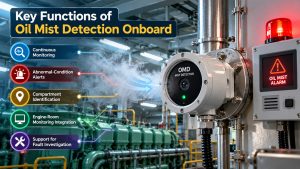
The main oil mist detector functions centre on recognising potentially hazardous oil mist conditions and communicating that information to the crew. The equipment supports engine monitoring, but it does not replace routine inspections or other protective systems.
On a vessel with a large marine diesel engine, the detector can help the engineering team recognise a developing problem that might otherwise remain hidden inside the crankcase.
Its principal functions include:
- Continuous or scheduled monitoring: The system checks designated areas according to its operating design.
- Abnormal-condition alerts: Visual or audible indications notify personnel when the detector identifies a concerning reading or system fault.
- Compartment identification: Where supported, the equipment helps identify the monitored location associated with an abnormal reading.
- Engine-room monitoring integration: Compatible systems can communicate alarms to central monitoring or control equipment.
- Support for fault investigation: Readings provide useful information when engineers assess a possible bearing, lubrication or overheating problem.
The oil mist detector alarm system is particularly important because detection alone is not enough. An alarm must reach the appropriate personnel, remain understandable under operating conditions and trigger a response consistent with the vessel’s procedures.
Never dismiss an OMD mist detector alarm simply because the engine appears to be running normally. The crew should follow the manufacturer’s instructions and the vessel’s safety procedures, including any requirements concerning engine operation or shutdown.
Types of Oil Mist Detectors Used in Marine Engines v
The types of oil mist detectors available for marine use differ in their sensing arrangements, sampling methods, monitoring coverage and intended applications. When selecting an OMD mist detector, consider the engine’s requirements and system compatibility rather than comparing product dimensions or purchase prices alone.
| Detector type or arrangement | Typical application | Important consideration |
| Optical crankcase detector | Monitoring oil mist in designated engine crankcase compartments | Confirm compatibility with the engine and sampling arrangement. |
| Multi-point sampling detector | Monitoring several compartments through a shared detection unit | Check sampling sequence, coverage and response characteristics. |
| Compartment-based monitoring system | Monitoring individual locations using the manufacturer’s specified arrangement | Review the number of monitored points and alarm configuration. |
| Atmospheric oil mist detector | Detecting airborne oil mist in designated spaces, such as certain machinery or pump areas | Confirm that the system is designed for the intended space and hazard. |
These categories describe broad arrangements rather than a universal classification. Product designs differ, and some systems combine features from more than one category.
A marine oil mist detector intended for engine crankcase monitoring should not be treated as interchangeable with an atmospheric detector. The former is designed for a specific engine-monitoring application, while the latter may be intended to detect oil mist in surrounding spaces.
Before ordering a replacement OMD mist detector, check the manufacturer, model number, engine application, number of monitored points, supply requirements and interface specifications. A unit that looks similar to the existing equipment may still be unsuitable for the installation.
Where Marine Engines Need Oil Mist Detection
A marine engine oil mist detector is commonly associated with large diesel engines where crankcase monitoring forms part of the engine’s protective arrangements. It helps identify abnormal oil mist conditions in designated engine compartments.
The crankcase oil mist detector is especially relevant when an internal mechanical problem suspends oil in the crankcase atmosphere. If the concentration reaches a hazardous level, oil mist combined with an ignition source can create a serious explosion risk. A marine oil mist detection system supports engine safety by monitoring designated compartments and alerting the crew when readings indicate a potentially hazardous condition.
Applications for an OMD mist detector may include main propulsion engines and auxiliary diesel engines, depending on the engine design and the protection system specified by the manufacturer. The correct arrangement depends on the installed equipment and applicable vessel requirements.
A ship oil mist detector may also be discussed in connection with other machinery spaces, but the intended application must be checked carefully. Atmospheric oil mist monitoring and crankcase monitoring address different conditions. They should not be assumed to provide the same coverage or protection.
The equipment contributes to crankcase explosion prevention by warning of conditions that may precede a dangerous event. It does not eliminate the underlying mechanical fault or make it safe to ignore other signs of engine trouble.
Within a wider marine diesel engine safety system, oil mist detection works alongside suitable maintenance practices, temperature and pressure monitoring, alarm management and manufacturer-approved operating procedures. The value comes from combining early warning with an appropriate response.
Maintaining Reliable Detection Equipment Onboard

An OMD mist detector can provide reliable warnings only when it is installed correctly and maintained according to the manufacturer’s requirements. Marine operating conditions, vibration, contamination, electrical faults and deterioration of sampling components can all affect its performance.
Maintenance intervals and test procedures vary by model, so follow the equipment manual and the vessel’s planned maintenance system to determine the required work.
Engineers should pay particular attention to:
- Alarm and function tests: Complete the prescribed checks and confirm that indications reach the intended monitoring points.
- Sampling arrangements: Inspect accessible pipes, connections and passages for damage, obstruction or leakage where applicable.
- Sensor condition: Follow the manufacturer’s cleaning, inspection and replacement instructions.
- Power and communication: Investigate intermittent indications, communication failures or unexpected resets.
- Fault records: Document alarms, test results, repairs and recurring problems to support future troubleshooting.
A fault indication is not necessarily the same as an oil mist alarm. Some systems distinguish between a potentially hazardous reading and a problem affecting the detector itself. The crew should understand these differences before an alarm occurs.
Never bypass a protective function or alter alarm settings without proper authorisation and the manufacturer’s guidance. If the equipment cannot be relied upon, follow the vessel’s established procedures for reporting and managing the fault.
Choosing a Compatible Replacement Unit
Selecting replacement equipment starts with the existing installation, not a catalogue description. A unit advertised as an oil mist detector may not match the engine, monitoring points or control interfaces fitted onboard.
For procurement teams, confirming the technical details early helps avoid ordering a detector that cannot be installed without additional changes.
Before purchasing an OMD mist detector, establish:
- Engine compatibility: Confirm the engine make, model and manufacturer’s specified detector arrangement.
- Equipment identification: Record the installed detector’s manufacturer, model and part number where available.
- Monitoring requirements: Verify the number of compartments, sampling method and required coverage.
- Electrical specifications: Check supply voltage, output signals, communication interfaces and alarm connections.
- Documentation and support: Request the applicable manuals, technical data and information on replacement parts or servicing.
- Installation requirements: Confirm dimensions, mounting arrangements and any modifications needed for the existing setup.
A replacement should meet the vessel’s technical and regulatory requirements, including any applicable class, flag-state or engine-manufacturer provisions. These requirements depend on the vessel and installation, so verify them rather than assume them.
For an older vessel, checking the installed equipment’s service history can also help identify recurring faults or obsolete parts. If a direct replacement is unavailable, confirm that the proposed alternative suits the specific engine and installation.
Conclusion: Protecting Marine Engine Operations
An OMD mist detector provides an important warning function by identifying abnormal oil mist conditions in designated engine spaces. Its sensing method, sampling arrangement, alarm functions and maintenance requirements all influence performance. Choosing compatible equipment and responding correctly to warnings support safer engine operation, although detection cannot guarantee it will prevent a crankcase explosion.
If your vessel requires a new detector, compatible replacement parts or assistance identifying suitable marine automation equipment, contact SACRED International. Share the existing unit’s model number, engine details, and technical requirements so we can identify the right equipment for your installation.
Common Questions About Marine Oil Mist Detectors
1. What does an OMD mist detector detect?
An OMD mist detector identifies abnormal oil mist conditions in designated engine compartments. In crankcase applications, its readings can alert the crew to conditions associated with a developing mechanical fault and a potential explosion hazard.
2. How does an oil mist detector work?
An OMD mist detector uses optical sensing in many systems to assess oil mist concentration in a sample. Electronic circuitry evaluates the measurement against configured criteria and activates an indication or alarm when it detects an abnormal condition.
3. Is an oil mist detector required on every ship?
Whether an OMD mist detector is required depends on the vessel, engine type, applicable regulations, classification requirements and manufacturer specifications. Shipowners should confirm the relevant provisions with the classification society, engine manufacturer and appropriate authorities.
4. What is the difference between crankcase and atmospheric detection?
An OMD mist detector designed for crankcase monitoring checks designated engine compartments for oil mist associated with internal engine hazards. Atmospheric detection monitors specified surrounding spaces for airborne oil mist. These systems serve different purposes and are not automatically interchangeable.
5. What causes an oil mist detector alarm?
An OMD mist detector may trigger an alarm when oil mist concentration reaches a configured threshold or another specified detection condition occurs. Separate fault indications may identify sampling, sensor, power or communication problems that require investigation.
6. How should I choose a replacement oil mist detector?
When choosing a replacement OMD mist detector, check the installed unit’s manufacturer, model number, engine compatibility, sampling arrangement and electrical interfaces. Confirm the replacement’s technical suitability and documentation before ordering, particularly if the original equipment is obsolete or unavailable.