Modern industrial operations depend on one thing more than most people realise—stable, reliable electrical power. Whether you’re operating a manufacturing plant, managing a commercial facility, or overseeing a marine vessel, even a brief electrical disturbance can interrupt production, affect sensitive equipment, and increase operating costs. That’s why power management system has become an essential part of modern electrical management.
Rather than waiting for faults to appear, businesses are using continuous monitoring to identify electrical issues early, improve reliability, and maintain uninterrupted operations.
At Sacred International, we work with industrial and marine businesses to deliver intelligent electrical automation and power management solutions. Through our experience with power distribution, switchboard automation, and advanced monitoring technologies, we’ve seen how proactive power quality monitoring helps organisations detect voltage instability, harmonic distortion, and electrical irregularities before they lead to costly downtime or equipment failure. This practical approach supports safer operations, greater efficiency, and long-term system reliability.
Whether you’re upgrading an existing electrical infrastructure or designing a new facility, understanding the condition of your power system is the first step towards improving operational performance.
To learn more about our integrated automation and electrical solutions, explore our Power Management System services and discover how intelligent monitoring supports reliable industrial and marine operations.
What Is Power Quality Monitoring?
Imagine driving a high-performance vehicle with poor-quality fuel. The engine may continue running, but performance gradually declines, fuel efficiency drops, and mechanical wear increases over time. Electrical systems behave in much the same way. Machinery can continue operating while hidden electrical issues slowly reduce efficiency, shorten equipment life, and increase maintenance costs.
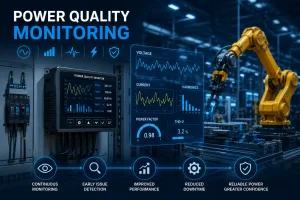
Power quality monitoring is the continuous measurement and analysis of electrical characteristics within a power distribution system. It records important parameters such as voltage, current, frequency, harmonics, power factor, electrical transients, and load conditions to evaluate the overall health of an electrical network.
Rather than reacting to equipment failures after they occur, businesses use continuous monitoring to identify developing problems early. This allows maintenance teams to make informed decisions based on real operational data instead of assumptions, reducing both planned and unplanned downtime.
As industrial facilities become increasingly automated, maintaining stable electrical performance has become just as important as maintaining mechanical equipment. Clean, reliable power supports higher productivity, better equipment performance, and greater operational confidence.
Why a Power Management System Matters More Than Ever
Industrial facilities today rely on sophisticated automation, robotics, intelligent control systems, and digitally connected equipment. While these technologies improve productivity, they also increase sensitivity to electrical disturbances that may have gone unnoticed in older facilities.
Even very brief voltage sags, harmonic distortion, or transient spikes can interrupt programmable controllers, damage sensitive electronics, trigger unexpected shutdowns, or affect production quality. These issues often develop gradually, making them difficult to identify without continuous monitoring.
Modern power monitoring systems provide real-time visibility into electrical performance across an entire facility. Instead of waiting for faults to disrupt operations, maintenance teams can identify abnormal trends, investigate the source of electrical disturbances, and resolve issues before they escalate into expensive failures.
This proactive approach transforms maintenance from reactive troubleshooting into predictive asset management, improving equipment reliability while reducing long-term operational costs.
Common Power Quality Issues That Affect Industrial and Marine Operations
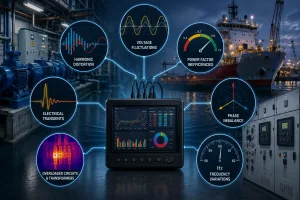
Electrical systems rarely fail without warning. In most cases, subtle electrical disturbances appear long before equipment experiences serious damage. Identifying these early warning signs is one of the greatest advantages of continuous power quality monitoring.
Some of the most common electrical issues include:
- Voltage fluctuations affecting sensitive equipment
- Harmonic distortion generated by variable speed drives and electronic devices
- Power factor inefficiencies increasing operating costs
- Electrical transients caused by switching events or lightning activity
- Phase imbalance across three-phase systems
- Overloaded circuits and transformers
- Frequency variations impacting automated processes
These issues can affect both industrial electrical systems and marine electrical systems, particularly where multiple high-load devices operate simultaneously. Left unresolved, they can reduce equipment lifespan, increase maintenance costs, and compromise overall system reliability.
Businesses that regularly perform power system monitoring gain valuable operational insight, allowing them to address problems before they impact productivity or safety.
Understanding the Relationship Between Power Quality and Energy Efficiency
While improving efficiency is important, maintaining complete visibility across the electrical network is equally essential. This is where modern monitoring technologies become invaluable.
Reliable electrical performance isn’t only about preventing failures. It also plays a major role in improving energy efficiency and reducing unnecessary operating costs.
Poor electrical quality often causes motors to work harder, transformers to generate additional heat, and equipment to consume more electricity than necessary. While these inefficiencies may seem insignificant individually, they accumulate over months and years, increasing energy costs across an entire operation.
By integrating energy management systems with continuous power quality monitoring, organisations gain a clearer understanding of how electricity is being consumed throughout their facilities. Maintenance teams can identify inefficient equipment, optimise electrical loads, and improve overall system performance without compromising productivity.
This combination of monitoring and optimisation supports sustainable operations while helping businesses meet growing expectations around energy efficiency and environmental responsibility.
How Power Monitoring Systems Improve Operational Visibility
Many organisations still rely on periodic electrical inspections, but occasional testing only provides a snapshot of system performance. Modern facilities require continuous visibility.
A power monitoring system continuously collects operational data from switchboards, distribution panels, generators, transformers, and critical production equipment. Engineers can review historical trends, compare performance over time, and investigate recurring electrical events using accurate, time-stamped information.
Instead of asking why a machine failed yesterday, maintenance teams can identify the conditions that gradually led to the failure. This shift from reactive maintenance to predictive decision-making improves reliability across the entire electrical infrastructure.
As facilities continue embracing digital transformation, intelligent power management is becoming an essential component of modern industrial operations rather than a luxury.
Traditional Electrical Maintenance vs Continuous Power Quality Monitoring
Although routine inspections remain important, they cannot continuously detect intermittent electrical events. This is where modern monitoring solutions provide a significant advantage.
| Traditional Electrical Maintenance | Power Quality Monitoring |
| Periodic inspections | Continuous real-time monitoring |
| Reactive fault finding | Predictive maintenance |
| Limited historical information | Complete trend analysis |
| Manual testing | Automated data collection |
| Equipment repaired after failure | Problems identified before failure |
| Short-term observations | Continuous operational insight |
The greatest advantage of power quality monitoring is visibility. Instead of relying on assumptions, engineers gain measurable data that supports faster diagnosis, smarter maintenance planning, and improved long-term reliability.
Marine Power Management System: Keeping Critical Operations Running
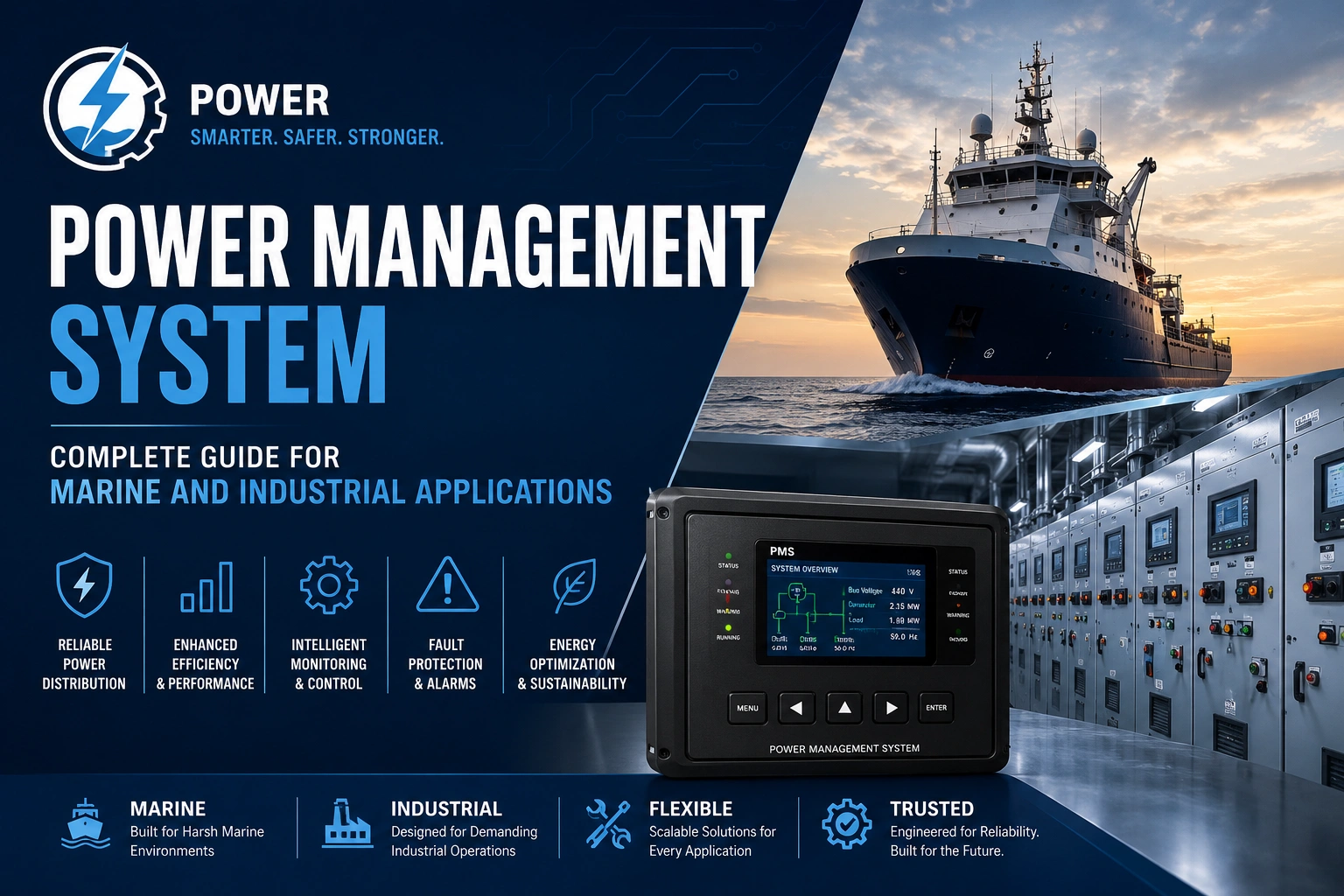
Marine vessels operate in demanding environments where electrical reliability is essential. Unlike land-based facilities, ships generate, distribute, and manage their own electrical power while at sea. Every navigation system, propulsion unit, communication device, and onboard service depends on a stable and intelligent electrical infrastructure.
A modern marine power management system continuously monitors electrical loads, balances power generation, and automatically adjusts generator operation to match changing demand. This intelligent approach improves fuel efficiency, reduces equipment wear, and ensures uninterrupted power for critical onboard systems.
For ship owners and marine operators, power quality monitoring works alongside a marine power management system to identify voltage instability, frequency variations, and harmonic distortion before they affect safety or operational performance. Rather than responding to unexpected failures, operators gain valuable insight that supports proactive maintenance and greater vessel reliability.
Industrial Power Management System: Building Smarter Manufacturing Facilities
Manufacturing environments are becoming increasingly automated, connected, and energy-intensive. As production lines expand, maintaining reliable electrical performance becomes more challenging.
An industrial power management system helps businesses monitor electrical demand, optimise energy consumption, and coordinate power distribution across multiple production areas. Combined with power quality monitoring, these systems provide real-time visibility into electrical performance while supporting predictive maintenance strategies.
Instead of reacting to unexpected equipment failures, maintenance teams can detect developing electrical issues early, analyse performance trends, and schedule maintenance during planned shutdowns. This improves production efficiency while reducing operational risk.
Whether managing a single production line or a multi-building industrial complex, intelligent electrical management supports consistent productivity and long-term operational stability.
Electrical Power Management Improves Reliability and Efficiency
Managing electricity isn’t simply about keeping equipment running—it’s about ensuring power is delivered safely, efficiently, and consistently throughout an entire facility.
Modern electrical power management combines monitoring, automation, protection, and analytics into one integrated approach. Engineers gain access to live electrical data that helps them understand energy consumption, identify abnormal conditions, and improve system performance.
When electrical events such as voltage fluctuations or harmonic distortion occur, maintenance teams can quickly investigate the root cause instead of relying on assumptions. This data-driven approach reduces unnecessary repairs while improving the overall reliability of industrial electrical systems.
As businesses continue investing in digital transformation, electrical power management has become a strategic tool for improving productivity, reducing maintenance costs, and extending equipment life.
Why an Intelligent Power Distribution System Matters
A reliable power distribution system forms the backbone of every industrial and marine operation. It ensures electricity reaches the right equipment at the correct voltage while maintaining safety, stability, and efficiency.
However, even a well-designed distribution system requires continuous monitoring. Overloaded circuits, uneven load distribution, ageing infrastructure, and unexpected electrical disturbances can gradually reduce performance if left unnoticed.
By integrating power quality monitoring into the power distribution system, engineers gain continuous insight into electrical conditions across switchboards, transformers, distribution panels, and critical loads. This visibility allows maintenance teams to detect inefficiencies early and implement targeted improvements before they affect operations.
Reliable power distribution is no longer just about delivering electricity—it’s about delivering confidence in every aspect of your electrical infrastructure.
Switchboard Automation: The Foundation of Intelligent Electrical Systems
Traditional switchboards were primarily designed for power distribution and protection. Today’s facilities demand much more. Modern switchboard automation transforms conventional electrical panels into intelligent control centres capable of monitoring, analysing, and responding to changing operating conditions in real time.
Automated switchboards collect performance data, communicate with supervisory control systems, and provide engineers with valuable operational insights. They also support faster fault detection, remote diagnostics, and improved system coordination.
When integrated with power quality monitoring, switchboard automation enables businesses to identify electrical abnormalities as they occur, helping reduce downtime while improving maintenance planning and operational efficiency.
For organisations planning electrical upgrades or automation projects, explore our Electrical Automation Solutions to see how intelligent switchboard technologies improve system performance and long-term reliability.
The Role of Generator Control Systems in Reliable Power Management
Backup generators are essential in many industrial plants, data centres, hospitals, offshore facilities, and marine applications. However, reliable backup power requires more than simply starting a generator during an outage.
A modern generator control system continuously monitors generator performance, synchronises multiple power sources, balances electrical loads, and manages automatic transitions between utility and backup power.
When combined with power quality monitoring, generator control systems help ensure that transferred power remains stable and suitable for sensitive electrical equipment. Engineers can analyse voltage performance, frequency stability, and generator loading to improve operational reliability while reducing unnecessary equipment stress.
This integrated approach supports business continuity by ensuring critical systems remain operational whenever primary power is interrupted.
Power Control Panels: More Than Electrical Enclosures
A power control panel is often viewed simply as an electrical cabinet, but its role extends far beyond housing electrical components.
Modern power control panels integrate intelligent controllers, protective devices, communication modules, and monitoring equipment into a single platform that manages power distribution and operational control.
By incorporating power quality monitoring within the control panel, maintenance teams gain immediate access to real-time electrical performance data. This allows engineers to identify developing issues before they affect connected equipment, improving overall reliability while simplifying maintenance activities.
Whether installed in manufacturing facilities, commercial buildings, or marine vessels, intelligent control panels provide greater operational transparency and support smarter electrical decision-making.
Electrical Automation Solutions Drive Smarter Operations
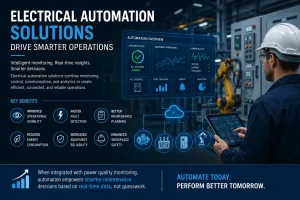
Automation has transformed the way industries operate. Modern electrical automation solutions combine intelligent monitoring, programmable controllers, communication networks, and advanced analytics to create more efficient, connected, and reliable operations.
Rather than responding to faults after production has stopped, automated systems continuously monitor equipment performance and provide early warnings when electrical conditions begin to change.
Some of the key benefits include:
- Improved operational visibility
- Faster fault detection
- Better maintenance planning
- Reduced energy consumption
- Increased equipment reliability
- Enhanced workplace safety
When integrated with power quality monitoring, automation becomes an even more powerful tool, enabling organisations to make informed maintenance decisions based on real-time operational data instead of reactive troubleshooting.
Supporting Global Best Practices in Electrical Safety
Reliable electrical systems are not only important for productivity but also for protecting people, equipment, and infrastructure. International standards and best practices encourage organisations to monitor electrical performance, reduce operational risks, and improve energy efficiency through proactive maintenance.
For guidance on improving energy performance and implementing effective energy management practices, refer to the International Energy Agency (IEA) and its resources on energy efficiency and sustainable energy management.
Organisations that combine continuous monitoring with recognised industry practices are better equipped to improve system reliability, reduce operating costs, and support long-term operational resilience.
Why Businesses Choose Sacred International for Intelligent Power Solutions
Reliable electrical performance doesn’t happen by chance. It comes from thoughtful system design, intelligent monitoring, and a commitment to continuous improvement. At Sacred International, we understand that every industrial facility and marine operation has unique operational requirements, which is why our solutions are designed to deliver dependable performance, operational efficiency, and long-term value.
Our expertise spans marine power management systems, industrial power management systems, switchboard automation, generator control systems, and advanced electrical automation solutions. By combining innovative technologies with practical engineering knowledge, we help businesses build smarter, more resilient electrical infrastructures that support productivity while reducing operational risks.
Rather than simply supplying equipment, we focus on delivering integrated solutions that provide greater visibility into electrical performance. Through intelligent monitoring and automation, organisations can improve decision-making, reduce maintenance costs, and confidently prepare for future operational demands.
The Future of Power Management Systems and Intelligent Power Management
The future of industrial and marine operations is increasingly connected, automated, and data-driven. As businesses adopt digital technologies, power quality monitoring is becoming a core component of intelligent infrastructure rather than a standalone maintenance tool. As renewable energy integration, battery storage systems, and smart grids become more common, power quality monitoring will play an even greater role in maintaining stable, efficient, and resilient electrical networks.
Cloud connectivity, Industrial Internet of Things (IIoT) devices, predictive analytics, and artificial intelligence are changing how organisations manage electrical assets. Modern monitoring platforms can identify trends, generate automated alerts, and provide maintenance teams with valuable insights before electrical issues affect operations.
At the same time, intelligent power management continues to improve energy efficiency, equipment reliability, and operational resilience. Businesses that invest in proactive monitoring today are better positioned to reduce downtime, optimise energy consumption, and adapt to future technological advancements with confidence.
Whether operating a manufacturing plant, commercial facility, offshore platform, or marine vessel, organisations that embrace intelligent electrical management are creating more efficient and sustainable operations for the years ahead.
Conclusion
Reliable electrical infrastructure is the foundation of safe, efficient, and productive industrial and marine operations. By adopting a proactive approach through power quality monitoring, organisations can detect hidden electrical issues early, improve equipment performance, optimise energy efficiency, and reduce costly downtime. Whether integrated with a marine power management system, an industrial power management system, or advanced electrical automation solutions, continuous monitoring provides the insights needed to make informed decisions, protect critical assets, and strengthen long-term operational reliability.
Whether you’re upgrading an existing electrical system or planning a new industrial or marine project, Sacred International can help you implement intelligent power management solutions tailored to your operational requirements. From advanced power quality monitoring and switchboard automation to complete electrical control and automation systems, our experienced team delivers reliable solutions that improve efficiency, minimise downtime, and support long-term business success. Contact our team today to discuss your requirements and discover how we can help build a smarter, safer, and more reliable electrical infrastructure.
Frequently Asked Questions
1. What is power quality monitoring, and why is it important?
Power quality monitoring is the continuous measurement and analysis of electrical characteristics such as voltage, current, frequency, harmonics, power factor, and electrical disturbances. It helps organisations detect developing issues before they lead to equipment failures, production downtime, or increased maintenance costs. By providing real-time insight into electrical system performance, businesses can improve reliability, protect valuable assets, and maintain efficient operations.
2. How does power quality monitoring improve industrial reliability?
Continuous monitoring enables maintenance teams to identify voltage fluctuations, harmonic distortion, overloaded circuits, and other electrical abnormalities before they become critical failures. This proactive approach supports predictive maintenance, reduces unexpected shutdowns, extends equipment lifespan, and improves the overall reliability of industrial electrical systems.
3. What is the difference between a marine power management system and an industrial power management system?
Both systems aim to optimize electrical performance, but they operate in different environments. A marine power management system manages onboard power generation, distribution, and generator synchronisation for vessels, while an industrial power management system focuses on monitoring and controlling electrical infrastructure within manufacturing facilities, commercial buildings, and industrial plants. Both benefit significantly from integrated power quality monitoring.
5. Can power quality monitoring improve energy efficiency?
Yes. By identifying inefficient electrical loads, voltage instability, harmonic distortion, and unnecessary energy losses, power quality monitoring helps organisations optimise energy consumption. When combined with an energy management system and intelligent power management strategies, businesses can improve operational efficiency while reducing energy costs.
6. How often should businesses perform a power quality assessment?
The ideal approach is continuous monitoring rather than occasional testing. While periodic inspections remain valuable, continuous power quality monitoring provides real-time visibility into electrical performance, making it easier to detect intermittent faults, monitor long-term trends, and plan maintenance activities before problems affect operations.