A vessel can be far from its home port when a small automation component fails at exactly the wrong time. Finding reliable marine ship automation spares can then become a race against the vessel’s next departure, maintenance window, or cargo schedule.
The second-hand market offers another route when a manufacturer has discontinued a component or a new replacement is difficult to obtain. A properly identified and tested used unit can keep an established system running without forcing the vessel into an unnecessary equipment upgrade.
The real value of second-hand equipment depends on more than its appearance. Its operating history, storage conditions, revision, testing and compatibility can all affect whether it is a dependable replacement.
Why Second-Hand Equipment Matters
Many commercial vessels operate with automation systems installed years ago. The system may still perform reliably, even though individual modules have disappeared from the manufacturer’s current catalogue.
Replacing an entire control arrangement because one processor, display, I/O module, or interface has failed can create unnecessary expense and downtime. This is where second-hand marine automation spares can become useful.
For example, an older bulk carrier may complete cargo operations and discover a failed signal module during its final pre-departure checks. The vessel does not need a new automation architecture. It needs the correct replacement quickly.
This distinction is important. Ship automation spares can help extend the working life of an established system, particularly when marine ship automation spares are correctly matched to the existing equipment and properly verified before installation.
The market can include unused surplus stock, equipment removed during upgrades, previously operated units and professionally refurbished components. Second-hand ship spare parts can therefore vary significantly in condition, history and testing. These categories should be assessed separately rather than labelled “used”.
Checking Second-Hand Automation Components
The first check should always be identification. Similar-looking modules can have different revisions, communication interfaces or electrical characteristics.
Start with the label on the existing equipment. Record the complete manufacturer name, part number, model, revision, and other visible identification details. If the installation allows, take photographs before removing the failed unit.
For marine ship automation spares, also compare the replacement with the surrounding equipment. A controller may need to communicate with particular I/O modules, power supplies, or operator interfaces. Physical similarity alone does not establish compatibility.
| Check before ordering | What to verify |
| Identification | Complete part number, model and revision |
| Electrical specifications | Voltage, ratings and power requirements |
| Connections | Connector and terminal arrangement |
| Communication | Interface and system compatibility |
| Physical fit | Dimensions, mounting and visible condition |
| Configuration | Firmware, software or programming requirements |
| Condition | Actual photographs and signs of damage |
| Testing | Functions tested and available test evidence |
If anything remains uncertain, provide photographs of the cabinet, connectors, and installed unit. For marine ship automation spares, these details give a specialist supplier much more useful information than a general equipment description.
Marine Spares Need A Clear History
A clean casing does not reveal how an electronic component has spent the last ten years. Its previous location and storage conditions can provide important clues.
A unit removed during a planned automation upgrade may have a straightforward service history. Another component may have been recovered after an electrical fault. Unused old stock may never have operated at sea but could have spent years in uncontrolled storage.
For marine ship automation spares, environmental exposure matters as much as the component’s visible condition. Equipment kept close to hot machinery can experience prolonged heat and vibration, which may accelerate wear. Components installed in less protected spaces may face humidity, salt-laden air or dust, leading to corrosion or circuit degradation.
Poor storage, such as exposure to moisture or temperature fluctuations, can also damage connectors and circuit boards, affecting reliability.
When purchasing marine spares, ask about:
- The item’s previous use and location
- Storage conditions and duration
- Any known faults or repairs
- Available testing or inspection records
- Whether its history is known or uncertain
The objective is not to demand a perfect history for every old component. It is to understand the available evidence before deciding how much risk is acceptable.
Used Marine Automation Parts And Weather

A vessel can move through several climates during one voyage. An electronic cabinet may experience a cold port, warmer open water, and humid tropical conditions before the ship reaches its next destination.
These changes can affect equipment through condensation and moisture. Salt-laden coastal air can also contribute to corrosion when it reaches poorly protected components or connectors. For marine ship automation spares, consider these environmental conditions before purchasing a replacement.
For used marine automation parts, the storage environment matters as well. A component kept in a dry, protected warehouse is not facing the same conditions as one stored near an open dock during a wet season.
Packaging becomes important during international transport. Sensitive electronics should be protected against moisture, movement, and impact while travelling between supplier and vessel.
There is also a practical installation point. If equipment arrives visibly wet, damaged, or exposed to unusual temperatures, it should not be connected just because the vessel is waiting. The technical team should assess its condition first.
Used Ship Automation Equipment Needs Testing
The word “tested” needs clarification.
A unit that powers on has passed a basic check, but that does not prove every input, output, or communication function works correctly. Intermittent faults can remain hidden until a component operates under load or communicates with the wider system.
For used ship automation equipment, ask the supplier what was actually tested. When assessing marine ship automation spares, testing should match the component’s actual role within the vessel’s automation system.
Check a display for more than illumination. A controller may need communication and response checks. Assess an I/O module based on the signals it handles.
If complete testing was impossible because the original system was unavailable, the supplier should say so. That does not automatically make the component unsuitable, but understanding the testing limitations helps the buyer evaluate the risk involved in using the spare.
For important equipment, request a test report or other evidence where available. Clear documentation is especially useful when a different technical team at another port will install the component.
Marine Automation Spare Parts Need Documentation
Older systems can become difficult to repair when their documentation disappears. A manual may be missing, wiring information may have changed, or configuration details may exist only in an experienced engineer’s memory.
Before replacing a failed component, photograph its label, wiring, and terminal positions. Save relevant configuration information and fault messages where possible.
This information can speed up sourcing marine automation spare parts because the supplier can compare the actual installation with available equipment.
For marine ship automation spares, accurate documentation can also help confirm that a replacement matches the original system before it ships. A replacement may be physically correct but require configuration to work properly with the existing system.
For fleet operators, keeping this information in a shared technical record is worthwhile. When the same ageing equipment is installed across several vessels, one accurate record can save considerable time during the next failure.
Refurbished Marine Automation Parts Explained
“Refurbished” does not mean the same thing everywhere. One supplier may clean a unit and perform a power test, while another may inspect circuit boards, replace worn components, and complete functional testing.
Ask what refurbishment actually involved. For marine ship automation spares, this distinction matters because you can’t always judge the condition of an older electronic component by its exterior.
For refurbished marine automation parts, ask whether internal components were replaced, connectors inspected, circuit boards checked, and operating functions tested.
Do not assume that refurbished automatically means better than used. A well-preserved original unit with a known history and proper testing may be a better purchase than a repaired component with limited documentation.
Price should be considered alongside evidence. A cheaper component that fails during the next port call can become considerably more expensive once you add emergency freight, technician time, and vessel delays.
The sensible comparison is therefore between overall risk and value, not just the purchase price.
Marine Control System Spares During Emergencies
Emergency sourcing leaves little room for casual searching. A vessel waiting for a replacement may have only a short maintenance window before departure. When you need marine ship automation spares urgently, knowing exactly what to source can save valuable time.
This is why it helps to identify difficult-to-source components before they fail. Record critical part numbers, revisions, installed locations, and known alternatives for ageing systems.
For marine control system spares, international logistics also needs consideration. A component may sit in a warehouse thousands of kilometres away, but that doesn’t mean it can reach the vessel in time.
Consider a container vessel due to leave Rotterdam after cargo operations. A suitable module is available overseas, but the supplier cannot dispatch it until several days after departure. Technically available, operationally useless.
When sourcing urgently, confirm physical stock, dispatch time, freight route, and delivery requirements before placing the order.
Marine Electrical Spares Need Care
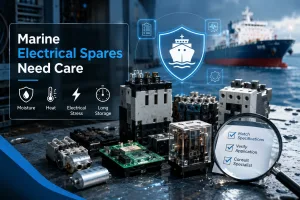
Electrical equipment can look excellent externally while ageing internally. Heat, moisture, electrical stress and long storage periods can affect relays, capacitors, contacts and circuit boards.
When sourcing marine electrical spares, match the electrical specifications rather than relying on appearance or a similar model number. This is particularly important when selecting marine ship automation spares for equipment that has already spent years onboard.
The vessel’s electrical environment also matters. Generators, large motors and variable-frequency drives can create conditions very different from those found during a simple warehouse test.
A component used in a generator control system, for example, may experience repeated load changes and vibration. Its replacement must therefore suit the original application, not just fit the cabinet.
For critical control functions, have the vessel’s electrical or automation specialist review the replacement before installation.
Choosing Marine Automation Equipment Suppliers
The supplier’s questions can reveal how seriously they approach second-hand equipment. A reliable sourcing process should make marine ship automation spares easier to identify, verify and deliver without unnecessary uncertainty.
A seller who immediately offers a similar-looking component may not have established compatibility. A specialist will usually ask for the complete part number, revision, photographs, application details and quantity before confirming a replacement.
This becomes even more important when buying internationally. Freight, customs procedures, packaging, time zones and vessel schedules can all affect the final delivery.
Marine ship automation spares should also be sourced with applicable maritime safety, electrical and equipment requirements in mind, particularly when components are intended for critical vessel systems.
Before placing an order, confirm:
- Whether the photographed item is the actual unit available
- Whether the component is physically in stock
- What testing has been completed
- How the equipment will be packaged for shipment
- Warranty and return conditions
- Shipping responsibility and expected dispatch time
A dependable supplier does not need to claim that every used component is perfect. The important thing is that they provide enough accurate information for you to make a sensible decision.
Conclusion
The second-hand market can be a practical option for vessels operating ageing or discontinued automation systems. Marine ship automation spares can help maintain an established system when the exact component is correctly identified, properly assessed, and available within the vessel’s required timeframe. The safest approach is to verify the component, understand its history, consider exposure to humidity, salt, heat, and vibration, confirm compatibility, ask about meaningful testing, and plan delivery around the vessel’s schedule.
Contact Sacred International with the manufacturer, complete part number, revision, quantity, and photographs of the existing equipment. Providing these details can help identify suitable second-hand or refurbished options for your vessel’s automation requirements.
Frequently Asked Questions
1. Are second-hand automation components suitable for ships?
They can be suitable when the marine ship automation spares match the installed system and have credible condition or testing information. Consider previous operating conditions, storage history, and the component’s role before installation.
2. How does weather affect used marine electronics?
Humidity, salt-laden air, condensation, and temperature changes can affect marine ship automation spares, particularly those stored or operated in exposed environments. Good packaging and controlled storage can reduce moisture-related risks before equipment reaches the vessel.
3. What does tested equipment actually mean?
For marine ship automation spares, “tested” should mean more than confirming that a component powers on. Depending on its function, checks may cover inputs, outputs, communications, displays, alarms, and other relevant operating functions.
4. Is refurbished equipment always better?
Not necessarily. The value of refurbished marine ship automation spares depends on what work was completed, how the unit was tested, and whether its history is known. Compare those factors with a properly tested used component before deciding.
5. What information helps identify an old component?
When sourcing marine ship automation spares, provide the manufacturer, complete part number, revision, and clear photographs. Images of connectors, wiring, the cabinet position, and surrounding equipment can also help a supplier confirm the correct replacement.
6. Should critical spares be sourced before failure?
For ageing systems, keeping suitable marine ship automation spares identified in advance can reduce downtime. Difficult-to-source modules may take time to locate, so early planning gives maintenance teams more opportunity to compare condition, testing, availability and delivery options.