A compressor failure rarely waits for a convenient moment. It can happen during a short port call, just before dry-docking, or while a vessel is operating far from its usual maintenance network. Finding the right air compressor parts then becomes a time-sensitive procurement task, not a routine purchase.
Difficult cases usually involve older compressors, discontinued components, incomplete records, or equipment that has spent years in saltwater and humid conditions. A matching component might still be sitting in a warehouse thousands of kilometres away, but finding it is only the beginning.
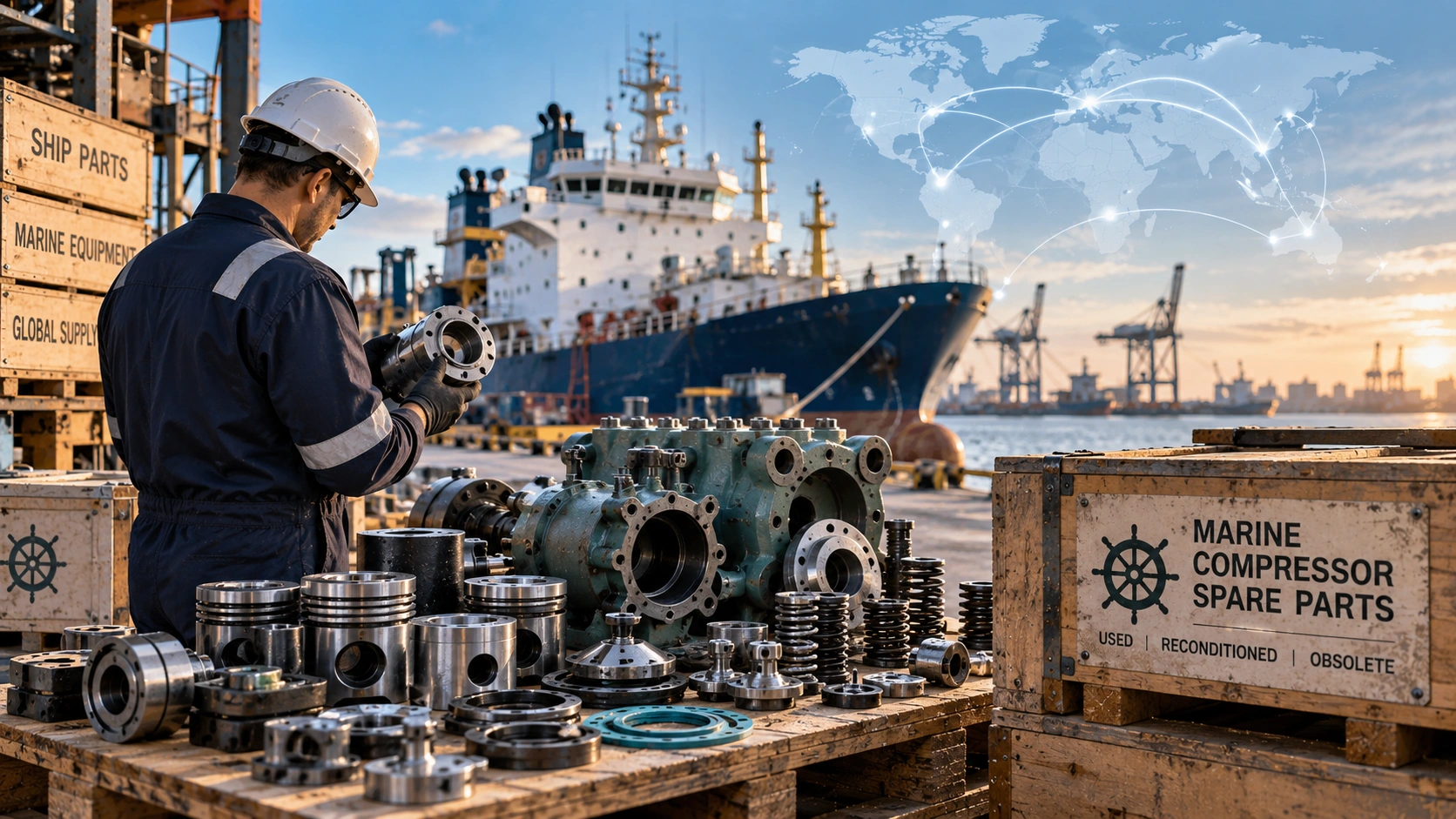
Used, reconditioned and obsolete components can all have a place in marine maintenance. The real question is whether the part’s history, condition and specifications make sense for the vessel and the repair schedule.
Start With Your Compressor Details
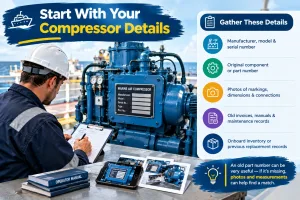
Before searching worldwide, confirm exactly what equipment you have. Record the manufacturer, model, serial number, compressor type, and original component number before contacting suppliers about air compressor parts.
This is especially important with an older marine air compressor, where two similar models may have different valves, seals, bearings, or control components.
Before contacting a supplier, gather:
- Manufacturer, compressor model and serial number
- Original component or part number
- Photos of markings, dimensions and connections
- Old invoices, manuals and maintenance records
- Onboard inventory or previous replacement records
An old part number can be extremely useful when the manufacturer no longer supports the model. If that number is missing, photographs and measurements can give a specialist supplier enough information to investigate possible matches.
Check Ship Air Compressor Parts Carefully
A component can look almost identical to the original and still be wrong for the equipment. Small differences in dimensions, connection types, materials, or pressure ratings can affect installation and operation.
When sourcing ship air compressor parts, compare the offered item against the compressor’s technical information instead of relying on photographs alone. This is particularly important where a supplier proposes an alternative rather than the original component.
Operating conditions matter too. A vessel trading through the Arabian Gulf may encounter high ambient temperatures, while a ship working around tropical ports may deal with persistent humidity and salt-laden air. Those conditions can influence the condition and service life of older components. Ask for photographs of the actual item and confirm key specifications before approving the purchase.
Understand Marine Air Compressor Spare Parts
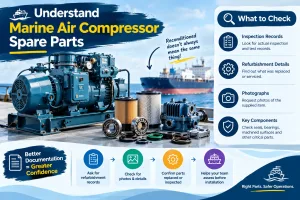
“Reconditioned” can mean very different things from one supplier to another. One component may have been cleaned and inspected, while another may have had seals, bearings or other worn items replaced before being offered for sale.
When purchasing marine air compressor spare parts, ask what the supplier can actually document about the component. Inspection records, refurbishment details and photographs of the supplied item are more useful than a general claim about its condition.
For components exposed to pressure, heat, or repeated movement, the refurbishment details deserve particular attention. Find out whether seals, bearings, machined surfaces, or other relevant elements were replaced or inspected.
A clear refurbishment record also helps the vessel’s engineers understand what they are receiving. Good documentation does not guarantee performance, but it gives the technical team a much stronger basis for assessing air compressor parts before installation.
Compare Used And Reconditioned Options
Cost is only one part of the decision. A cheaper component that arrives after the vessel leaves port can be more expensive in practical terms than a verified alternative already available for dispatch.
When comparing air compressor spare parts, consider condition, availability, refurbishment work, delivery time, and the consequences of delaying the repair.
| Option | Check before buying | Typical situation |
| New | Original specification and availability | Current compressor models |
| Reconditioned | Refurbishment work and testing | Older equipment with limited new stock |
| Used | Previous service and storage condition | Rare or discontinued components |
| Equivalent | Technical compatibility | Original part no longer produced |
Consider a vessel with only two days alongside for maintenance while the original component has a six-week lead time. A verified reconditioned option may be worth investigating if its technical condition and delivery schedule satisfy the engineering requirements.
The sensible choice depends on the actual machinery, maintenance window and condition of the air compressor parts, rather than simply selecting the lowest quotation.
Trace Obsolete Marine Compressor Parts
Obsolete equipment requires a different search strategy. Current catalogues may tell you very little about a compressor installed twenty or thirty years ago, even though suitable components may still exist.
Old drawings, invoices, manuals and previous maintenance records can uncover discontinued numbers or superseded references. These records become especially valuable when tracing air compressor parts that have disappeared from current catalogues. Specialist suppliers may also have access to surplus stock, recovered components and older inventories that never appear in public catalogues.
For marine compressor parts, send several identification details in the first enquiry. Include the model, serial number, original part number, photographs, quantity and delivery location.
A superseded number does not automatically mean a direct replacement. Compare the alternative with the compressor model, dimensions and connection details, and clarify any required installation changes before ordering.
Look Beyond Ship Compressor Parts

Sometimes the original equipment channel cannot supply what the vessel needs. Expanding the search to specialist marine inventories can uncover options that a conventional catalogue search misses.
This is where ship compressor parts sourcing becomes a technical investigation rather than a simple product search. A supplier may need to compare old drawings, dimensions, photographs, and historical part references.
Keep the difference between an original replacement and an alternative clear throughout the enquiry. If an alternative requires changes during installation, the technical team should know this before approving the order.
Complete information also speeds up the process. Sending the compressor details and photographs at the start gives suppliers a much better chance of locating suitable air compressor parts without several rounds of clarification.
Consider The Marine Operating Environment
Marine equipment can spend years in places where salt air, humidity and temperature swings are part of everyday operation. Those conditions become worth checking when an older component has spent a long time in storage.
For marine compressed air systems, the environment in which equipment operates and is stored can therefore matter when assessing older air compressor parts. A component kept near a humid coastal workshop may have a different condition from one stored in a controlled warehouse.
Check photographs for corrosion around threads, connection points, machined surfaces and exposed fasteners. Rubber seals and other materials can also deteriorate during prolonged storage.
A component’s age alone does not tell you whether it is usable. Its previous service, refurbishment history and storage conditions provide a much more useful picture when assessing its condition.
Choose A Marine Spare Parts Supplier
The supplier becomes part of the purchasing decision when the required component is rare, discontinued, or needed quickly. Clear communication can prevent mistakes before you arrange an international shipment.
A marine spare parts supplier should be able to tell you where the component is, what condition it is in, what has been checked and when it can actually leave the warehouse.
Before ordering, confirm:
- Whether the physical component is actually in stock.
- Where the stock is located.
- What inspection or refurbishment has been completed.
- Whether photographs of the actual item are available.
- When it can be dispatched.
This becomes particularly important during dry-dock work, where one missing component can hold up several related maintenance tasks. A supplier familiar with air compressor parts should understand that timing can matter as much as price.
Plan International Delivery Before Ordering
Finding a component in another country does not automatically solve a vessel’s problem. A part sitting in Hamburg may be of little use to a ship leaving an African port tomorrow unless the air compressor parts can reach the vessel within its maintenance window.
For marine equipment spare parts, confirm the stock location, dispatch timing, destination and shipping arrangements before treating an item as an urgent solution.
Ask whether the component is ready for dispatch or still requires inspection, refurbishment and packing. Customs clearance and freight handling can add further time, particularly when the destination changes because the vessel’s itinerary moves.
For urgent requirements, the useful question is not simply “Is it available?” It is “Can it reach the required location within the maintenance window?”
Keep A Record For Future Repairs
Once you’ve successfully sourced a difficult component, save the information. The next engineer facing the same problem should not have to start the search from scratch.
Keep the compressor model, serial number, original part number, confirmed alternatives, supplier information, and photographs together. Record what was actually supplied and whether any installation changes were required.
This creates a useful sourcing history for marine compressor spare parts, particularly on older vessels where manufacturer support is limited.
The record can also highlight components worth purchasing ahead of time. Keeping a verified source for hard-to-find air compressor parts can reduce the pressure of future emergency procurement.
Build A Reliable Sourcing Process
A dependable sourcing process begins with accurate equipment identification and ends with realistic delivery planning. In between, air compressor parts should be checked against their condition, compatibility, storage history and refurbishment details.
When choosing a reliable marine equipment supplier, look for transparency rather than impressive catalogue language. The supplier should tell you what is verified, what has been refurbished, and where technical information is still uncertain.
For vessels operating under international maritime requirements, replacement components should be assessed against applicable SOLAS, flag-state, and classification requirements before installation.
For an air compressor for ships, this matters because a component may need to perform in vibration, heat, humidity, and salt exposure while the vessel is operating far from its home port.
Make Difficult Parts Easier To Source
Sourcing air compressor parts for an older vessel is rarely about finding the first item that looks right. Check the component’s history, storage conditions, technical compatibility and delivery timing before committing to the purchase. A disciplined approach is particularly useful for ship machinery spare parts, where discontinued equipment and international delivery can complicate a routine replacement.
If you need help sourcing discontinued, used, or reconditioned components, contact SACRED International with your compressor model, part number, photographs, and delivery requirements. Its sourcing team can investigate second-hand marine compressor parts and other difficult-to-find marine equipment worldwide.
Frequently Asked Questions
1. How do I identify an obsolete compressor component?
Start with the manufacturer’s name, model, serial number, and original part number. Old manuals, drawings and photographs can provide further evidence when records are incomplete, helping suppliers locate suitable air compressor parts.
2. Are reconditioned components suitable for ships?
They can be suitable when refurbishment quality and compatibility are properly established. Ask what was replaced, inspected, or tested, particularly for components that play an important role in the compressor’s operation and air compressor parts.
3. Does tropical weather affect stored components?
Yes. High humidity, salt exposure, and condensation can contribute to corrosion and material deterioration during poor storage. Consider these conditions when assessing older air compressor parts before purchase or installation.
4. Can discontinued components have alternatives?
Sometimes. Manufacturers may have superseded older designs, while specialist suppliers may identify technically compatible alternatives. However, physical similarity is not enough; check specifications and installation requirements for air compressor parts.
5. What information should I send a supplier?
Provide the compressor manufacturer, model, serial number, original component number, photographs, quantity, and delivery location. Dimensions and drawings can add useful detail when searching for difficult air compressor parts.
6. Why does delivery location matter?
Marine components may cross several borders before reaching a vessel, and schedules can change quickly. Providing the destination early helps suppliers assess freight, customs, dispatch timing, and availability of air compressor parts.