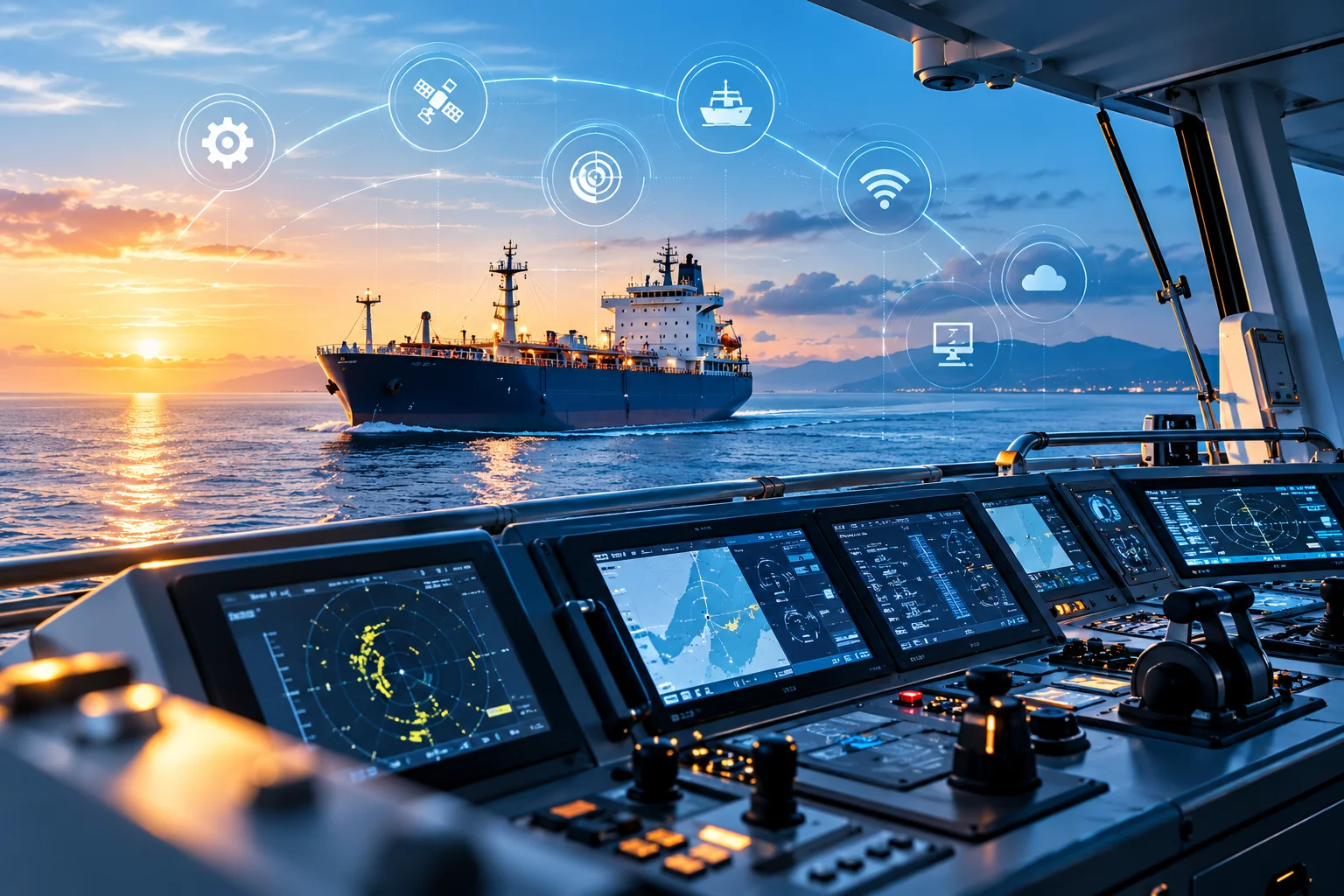
A vessel can be far from shore when an engine temperature rises, a generator takes an unexpected load, or heavy seas change operating conditions. Marine automation systems help the crew see these changes early without checking every machine by hand.
A ship is a demanding workplace. Salt air, humidity, vibration, machinery heat and changing weather can affect equipment throughout a voyage. At the same time, engineers may need to monitor propulsion, power generation, pumps, tanks and auxiliary machinery simultaneously.
Automation’s value isn’t about filling a control room with screens. It comes from connecting useful information, presenting it clearly and helping the crew respond when conditions become busy, unpredictable or difficult.
Understanding Marine automation systems
Picture an engineer beginning a watch after several hours of rough weather. Most machinery is operating normally, but one cooling pump is showing a temperature slightly above its usual range.
Without central monitoring, that change might only become obvious during a physical inspection. The system can display the reading on an operator display alongside equipment status, alarms, and related measurements.
A typical arrangement combines sensors, controllers, communication networks and operator interfaces. Sensors measure conditions such as pressure, temperature, flow and tank level. Controllers process those signals and carry out programmed functions, while displays allow engineers to review what is happening.
This creates a practical connection between machinery and the people operating it. Marine automation systems do not replace engineering judgement; they give engineers better information before deciding whether equipment needs adjustment, inspection or maintenance.
How Marine Control Systems Respond
Automation becomes particularly useful when several conditions change together. Consider a vessel approaching a busy port after an overnight passage. Propulsion demand changes as the vessel slows. Steering and manoeuvring equipment becomes more active, while generators, pumps and ventilation systems continue supporting other onboard requirements.
Well-designed marine control systems can bring relevant information together and control selected functions according to programmed conditions. This is one area where marine automation systems can help the crew follow changing conditions without moving between separate control points.
Describe how automation responds with alarms, status changes, or automatic adjustments to help the crew understand real-time control actions.
Alarm management is important here. If every small variation triggers the same warning, engineers can quickly become overwhelmed by information. Critical conditions should be distinguishable from warnings that require observation.
Local controls and independent protection also remain important. Central automation should support safe operation rather than become the only way to manage essential equipment.
Marine Automation Equipment For Harsh Seas
Equipment onboard a ship works in unforgiving conditions. An electronics cabinet may sit close to machinery producing continuous vibration, while heat and humidity build inside the engine room during long operating periods.
On deck, salt spray and moisture create different challenges. Offshore vessels may also experience heavy weather, repeated vibration and sudden changes in operating conditions.
That makes marine automation equipment selection more than a specification exercise. Choosing components suited to their environment and function helps engineers feel confident in system reliability and safety.
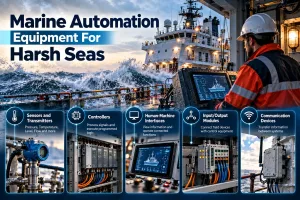
Common ship automation equipment includes:
- Sensors and transmitters for pressure, temperature, level, flow and other measurements.
- Controllers that process signals and execute programmed logic.
- Human-machine interfaces for viewing information and operating connected functions.
- Input/output modules that connect field devices with control equipment.
- Communication devices that transfer information between systems.
When these devices form part of marine automation systems, compatibility matters during replacement work. Ensuring sensors, controllers, and interfaces are compatible can give technical managers confidence in system stability and performance.
Ship Automation Systems In Daily Operations
Automation does not look identical on every vessel. A container ship, ferry, tanker and offshore support vessel can have very different machinery and operating priorities.
A large commercial vessel may monitor propulsion support equipment, generators, pumps, fuel systems, ballast systems and ventilation. A smaller working vessel may concentrate on propulsion, electrical power and essential alarms.
Ship automation systems become particularly useful when engineers need to understand several connected conditions quickly. The same applies to marine automation systems, where information from different onboard functions can be viewed as part of one operating picture.
Consider a vessel operating in tropical waters. High temperatures can increase cooling and ventilation demand, while cargo operations or accommodation loads can increase electrical consumption. Engineers need to see these changes together, not as isolated readings.
The situation can be very different in colder waters, where heating requirements and environmental conditions create another operating profile.
Good vessel automation systems should reflect the ship’s route, machinery and workload rather than assuming every vessel operates under identical conditions, encouraging professionals to see future trends as opportunities for improvement.
Marine Automation Solutions For Existing Vessels
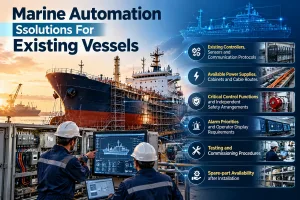
New vessels can be designed around a complete automation architecture. Older ships are more complicated.
A vessel undergoing a refit may have controllers from one generation, sensors from another and equipment installed during several previous upgrades. Replacing everything may be expensive, disruptive or unnecessary.
This is where marine automation solutions should begin with the vessel’s existing architecture. The same planning is important when marine automation systems are upgraded gradually rather than replaced in one project.
Engineers first need to understand how current equipment communicates. They can then determine which components can remain, which require replacement and where gateways or interface modules are needed.
A practical upgrade should consider:
- Existing controllers, sensors and communication protocols.
- Available power supplies, cabinets and cable routes.
- Critical control functions and independent safety arrangements.
- Alarm priorities and operator display requirements.
- Testing and commissioning procedures.
- Spare-part availability after installation.
This approach is especially useful for vessels that spend long periods away from major repair centres. A system that technicians can understand and maintain efficiently can reduce disruption during scheduled port visits.
Marine Electrical Automation And Power
Electrical demand on a vessel rarely stays constant. Starting a large motor, changing propulsion conditions, operating cargo equipment or switching generators can alter the load within minutes.
Marine electrical automation helps engineers monitor generator output, power distribution and connected electrical loads while supporting selected control functions. In a wider setup, marine automation systems can bring those electrical conditions together with other operating information.
Imagine a vessel leaving port on a hot afternoon. Air-conditioning demand is already high, pumps are operating, and navigation equipment is active. As propulsion demand increases, the electrical system must continue supplying the vessel without unnecessary strain.
Depending on the installation, power-management functions can support generator sequencing, load sharing and other programmed responses.
However, automation should complement electrical protection, not replace it. Circuit protection, emergency power arrangements and independent safety functions remain essential parts of a properly designed vessel.
Marine Monitoring Systems Turn Data Useful
A control room can collect an enormous amount of information. That does not mean an engineer needs every number displayed at once.
The useful question for marine control and monitoring systems is whether the information helps someone notice a change and decide what to do next. That is where marine automation systems become more useful than a collection of disconnected readings.
Marine monitoring systems can display live readings, equipment status, alarms and historical trends. This becomes particularly useful when machinery starts behaving differently without yet reaching a critical alarm point.
Suppose a cooling pump normally operates within a stable temperature range. During several days at sea, its temperature gradually rises. The change may be small each day, but the trend could encourage an engineer to inspect the pump, filter, bearings or cooling path before the next long passage.
| Monitoring Area | Information Watched | Practical Use |
| Engine | Temperature, pressure, speed | Spot unusual operating changes |
| Generator | Load, voltage, frequency | Follow electrical demand |
| Pumps | Pressure, flow, status | Check transfer and cooling |
| Tanks | Level, temperature | Track fuel and service fluids |
| Machinery spaces | Temperature, alarms | Identify abnormal conditions |
| Power system | Load and distribution | Understand generator demand |
The point is not to collect data for its own sake. A useful trend gives the crew enough context to investigate before a minor change becomes a larger operational problem.
Marine Automation Technology And Future Ships
The next stage of automation is not simply adding more connected devices. The focus is shifting towards using operational information more effectively for condition monitoring, maintenance planning and energy management.
Marine automation technology can connect equipment data with digital records, reporting tools and shore-based systems. As these capabilities develop, marine automation systems can give technical teams a broader view of vessel performance while keeping onboard engineers involved in operational decisions.
Condition-based maintenance is one practical example. Instead of relying only on fixed service intervals, engineers can consider running hours, equipment trends and inspection findings together when planning maintenance.
Connectivity also creates new responsibilities. Access controls, software updates, network security and clear separation between critical and non-critical systems deserve attention as more equipment becomes connected. The UK Maritime and Coastguard Agency also highlights automation, communications, cybersecurity and data management as areas that need to be considered as maritime digital systems develop.
For vessels operating far from technical support, this matters even more. A fault that might be straightforward to resolve near a major port can become a serious logistical issue when the vessel is days from specialist assistance. Future-ready automation therefore needs to be connected without becoming unnecessarily complicated.
Choosing Marine Automation Suppliers Wisely
Selecting a supplier involves more than finding an individual component at an attractive price. Replacement marine automation components must fit the vessel’s existing technical environment.
A controller, sensor, or interface may look correct by model number but still require specific communication settings, configuration files, power characteristics, or supporting components. When sourcing Marine automation systems, these details can determine whether a replacement works smoothly with existing equipment.
Reliable marine automation suppliers should provide clear specifications, compatibility information, technical documentation and practical assistance with replacement requirements.
This becomes especially important for older vessels. A discontinued component may require an equivalent product, an interface change or a different integration approach.
Before ordering, confirm:
- Exact equipment model and revision.
- Electrical and communication specifications.
- Environmental conditions at the installation point.
- Compatibility with existing controllers and displays.
- Availability of replacement parts.
- Documentation required for installation and commissioning.
For a vessel far from its home port, these details can prevent a simple equipment failure from becoming a prolonged search for the right replacement.
Final Thoughts
The value of marine automation systems becomes clearer when machinery, weather, electrical demand and maintenance needs change without warning. A suitable system connects compatible equipment, presents useful information clearly and gives engineers better visibility without removing human oversight.
If you need automation equipment, replacement components or marine automation services for your vessel, contact Sacred International to discuss your requirements and find suitable solutions for your operation.
Frequently Asked Questions
1. What does a marine automation system control?
A marine automation system can monitor and control selected engines, generators, pumps, valves, tanks and electrical equipment. When integrated into marine automation systems, these functions can be tailored to the vessel’s design, machinery and operating environment.
2. Can older vessels use modern automation?
Yes. Retrofit projects can connect suitable existing equipment with newer controllers, interfaces and monitoring platforms. This allows marine automation systems to be upgraded without necessarily replacing every component, provided signals, protocols and physical requirements are compatible.
3. Does climate affect marine automation equipment?
Yes. Heat, humidity, salt exposure, vibration and water ingress can influence equipment selection and installation. Marine automation systems must therefore suit the vessel’s operating environment, particularly when ships regularly work in tropical, coastal or storm-prone waters.
4. What do monitoring systems normally measure?
Monitoring systems can display temperature, pressure, flow, tank level, generator load, equipment status and alarms. Within Marine automation systems, these measurements help engineers understand changing machinery conditions and focus attention on issues that may require inspection.
5. Why does compatibility matter during upgrades?
Automation devices communicate through particular signals and protocols. When upgrading Marine automation systems, replacement equipment must match the existing architecture or use suitable interfaces; otherwise, you may need configuration changes before the system operates correctly.
6. Does ship engine automation replace engineers?
No. Ship engine automation handles selected monitoring and programmed control functions, while marine automation systems support engineers as they interpret conditions, investigate faults and make operational decisions during normal and unusual situations.