Picture a container vessel preparing to leave one of the world’s busiest ports. A power management system often proves its value long before anyone notices it. Bow thrusters engage, cargo refrigeration continues running, navigation systems remain active, and hotel services operate without interruption. Behind the scenes, electrical demand changes within seconds. The challenge is not producing enough electricity but ensuring every critical system receives power exactly when it needs it.
Similar situations play out inside industrial facilities every day. Production lines restart after maintenance, heavy motors begin operating together, and energy demand climbs rapidly within minutes. Without intelligent electrical coordination, these sudden changes can overload equipment, waste fuel, and create costly downtime that disrupts operations.
Whether it is a container ship crossing the Pacific or a manufacturing plant running three production shifts, today’s operations depend on electricity that responds as quickly as the business itself. Today’s most reliable organisations succeed by managing every available kilowatt with greater intelligence and precision.
How a Power Management System Maintains Stability
Electrical networks are constantly responding to changing conditions rather than operating at a fixed load. A vessel may experience peak demand during maneuvering, while a manufacturing facility can see similar spikes when multiple production lines begin operating at the same time. These short periods often determine whether an electrical system remains stable or experiences unnecessary stress.
This is where a power management system changes everyday operations. Beyond automatic adjustments, it can also execute predefined safety protocols during faults or emergencies, ensuring personnel safety and equipment protection, which reassures operators about system reliability in critical situations.
Picture a vessel preparing to enter harbour after days at sea. Navigation equipment is fully active, ballast pumps begin operating, bow thrusters prepare for maneuvering, engine room auxiliaries remain online, and cargo systems are getting ready for unloading. Electrical demand rises within minutes rather than hours. Instead of asking engineers to start another generator or redistribute loads manually, intelligent automation evaluates the available capacity, synchronizes additional generation when required, and maintains electrical stability throughout the operation.
The result extends beyond keeping lights on; optimized load sharing fosters confidence in operational stability, reducing fuel costs and mechanical wear, which reassures decision-makers of system resilience.
Marine Power Management System Benefits
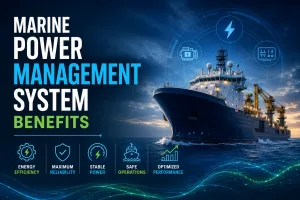
Marine operations present electrical challenges that land-based facilities rarely encounter. Rolling seas, changing weather, variable cargo operations, and limited onboard generation capacity demand constant power stability.
A power management system enables marine operators to maintain a stable electrical supply and automatically adapt to operational changes without disrupting essential services. It integrates seamlessly with existing generators, switchboards, and control systems, minimizing installation complexity and downtime, which helps decision-makers understand deployment feasibility.
Some of the most valuable advantages include:
- Synchronizes multiple generators during changing operational loads.
- Prevents unnecessary generator operation during low-demand periods.
- Automatically performs load shedding before critical systems become unstable.
- Supports blackout prevention during maneuvering and cargo handling.
- Protects propulsion, navigation, and auxiliary electrical equipment.
- Maintains stable electrical supply even during rapid demand fluctuations.
Consider an offshore construction vessel operating far from shore. Dynamic positioning systems, heavy lifting cranes, accommodation services, navigation equipment, and communication systems all rely on uninterrupted electrical supply. During complex offshore operations, even a brief power disturbance can disrupt critical tasks or pose safety risks. Intelligent automation works alongside the generator control system to prioritize essential loads, synchronize generation, and maintain balanced generator performance throughout changing operational conditions.
As international shipping companies continue investing in smarter fleets, advanced marine electrical systems are becoming essential for maintaining operational reliability and regulatory compliance. Many modern Power Management Systems are also engineered to align with IEC 60092 requirements and the standards of leading marine classification societies, helping operators support safe and dependable vessel operations.
Industrial Power Management System Applications
Expanding electrical capacity is not always the most economical solution. Many facilities discover that their existing infrastructure can support higher production simply by managing available power more intelligently. Instead of preparing for peak demand at every moment, operators increasingly focus on optimising the electricity they already generate.
An industrial power management system makes that possible by analyzing real-time demand and allocating available capacity where it creates the greatest operational value.
| Operational Challenge | Intelligent System Response | Business Outcome |
| Sudden production surge | Balances electrical loads automatically | Stable operations |
| Multiple generators running | Optimizes generator sharing | Lower fuel costs |
| Equipment overload | Disconnects non-critical loads first | Prevents shutdown |
| Unexpected electrical fault | Isolates affected circuits quickly | Reduced downtime |
| Variable production schedule | Adjusts generation based on demand | Higher efficiency |
Imagine a semiconductor manufacturing facility where clean-room ventilation, precision processing equipment, robotic handling systems, and climate control operate around the clock. Even a short voltage disturbance can interrupt production and require expensive process recovery. Instead of preparing for every possible peak with oversized infrastructure, intelligent electrical management continuously allocates available capacity based on actual operating demand. This approach improves energy utilization without compromising production targets, making industrial electrical systems more responsive to changing business needs while supporting long-term operational efficiency.
Smarter Electrical Power Management Decisions
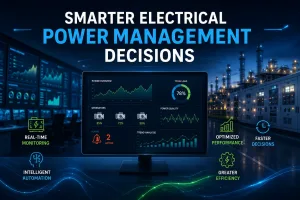
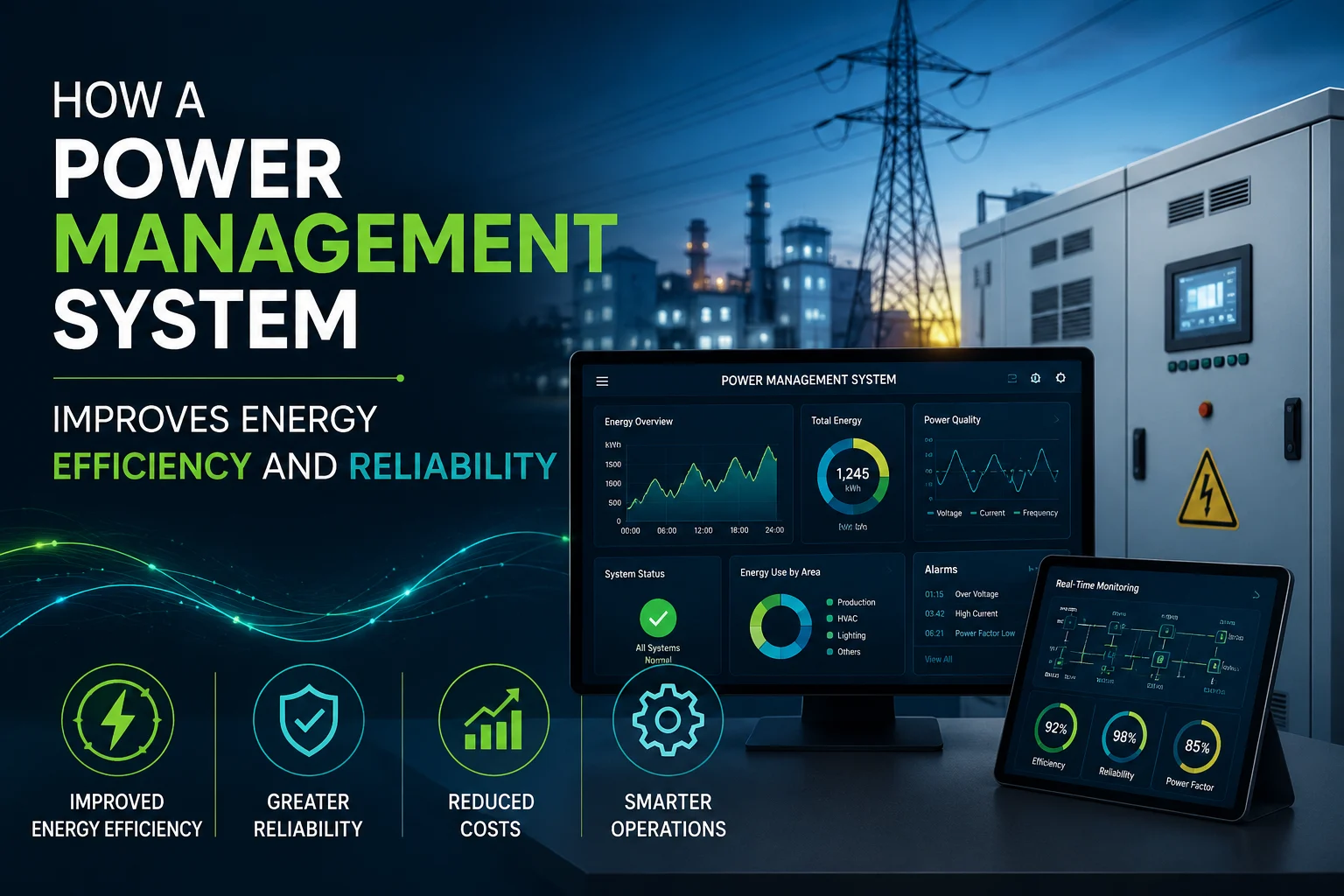
Every modern vessel and industrial facility generates thousands of electrical readings every minute. Current, voltage, frequency, generator loading, breaker status, and power quality are constantly changing. The real advantage comes from turning those measurements into decisions before operators even recognize that electrical conditions are beginning to shift.
A power management system supports faster operational decisions by combining real-time electrical measurements with intelligent automation. Instead of relying solely on alarms after a fault occurs, operators receive meaningful insights from power system monitoring, enabling them to track changing load behaviour, equipment performance, and available generating capacity before faults affect operations.
This becomes especially valuable in facilities where several electrical systems operate simultaneously, including:
- Live generator loading analysis.
- Automatic load forecasting during changing operations.
- Switchboard status monitoring across connected assets.
- Alarm prioritization for faster operator response.
- Historical trend analysis supporting predictive maintenance.
- Centralized visibility across multiple electrical systems.
Consider a hyperscale data center supporting financial transactions, cloud applications, and AI workloads around the clock. Backup generators, UPS systems, cooling equipment, and power distribution infrastructure must work together without interruption. Intelligent monitoring detects changes in electrical conditions early enough for automated responses to maintain service continuity, even during unexpected demand fluctuations.
Unlike traditional electrical supervision, modern automation supports decisions based on actual operating conditions rather than fixed assumptions. As a result, facilities become more adaptable, efficient, and resilient even when demand changes unexpectedly.
Power Distribution System Performance
A reliable power distribution system is not measured by how much electricity it can carry but by how consistently it delivers power where and when it is needed. Every unnecessary voltage fluctuation, delayed response, or overloaded feeder increases the likelihood of equipment stress and unexpected downtime.
A power management system strengthens distribution performance by continuously analyzing power flow across connected assets. Integrated with the power control panel, it gives operators greater visibility while prioritizing critical circuits during changing operating conditions. Critical operations always receive priority, while less essential loads can be delayed or managed intelligently during periods of high demand.
Consider a busy container terminal where ship-to-shore cranes, lighting towers, reefer container connections, warehouses, and administrative buildings share the same electrical infrastructure. Demand changes throughout the day as vessels arrive and depart. Without intelligent coordination, sudden peaks may overload sections of the network or reduce equipment efficiency. Automated control maintains balance across the distribution network, allowing operations to continue smoothly even during the busiest working hours.
Reliable distribution ultimately protects both productivity and valuable electrical assets while reducing avoidable maintenance costs.
Intelligent Power Management Ahead
The next generation of electrical infrastructure is becoming increasingly connected. Commercial vessels are integrating battery energy storage, hybrid propulsion, shore power connectivity, and remote fleet monitoring into everyday operations. As electrical networks become more complex, organizations will increasingly rely on automation to manage growing operational demands without sacrificing reliability or efficiency.
A power management system is becoming the foundation for this smarter approach because it integrates with technologies such as an energy management system and cloud-based analytics.
Several trends are shaping the future:
- Greater use of predictive maintenance to identify electrical issues before failures occur.
- Integration with renewable energy sources and hybrid power generation.
- Remote monitoring across multiple vessels or industrial facilities.
- AI-assisted analysis that recommends more efficient operating strategies.
- Higher demand for cybersecurity within connected electrical networks.
- Increased focus on sustainability and measurable energy efficiency solutions.
These developments are changing expectations across the industry. Shipowners now expect electrical automation solutions that provide greater operational visibility across entire fleets, while industrial operators require systems capable of adapting to changing production demands with minimal manual intervention.
Building Reliability Through Better Control
Reliable electrical performance rarely depends on a single generator or switchboard. It comes from hundreds of automated decisions made every second as operating conditions continue changing. When generation, distribution, monitoring, and protection work together, organizations gain greater confidence that their operations can continue even during demanding situations.
A power management system provides that control by connecting generation, monitoring, protection, and automation into one coordinated platform. Instead of responding to electrical problems after they disrupt operations, businesses can maintain stable performance while adapting to changing operational demands with greater confidence.
For global marine operators and industrial facilities, this means fewer interruptions, improved generator utilization, lower operating costs, and stronger long-term asset performance. As electrical infrastructure continues becoming more connected, intelligent management will remain one of the most valuable investments for organizations seeking dependable and efficient operations.
Conclusion
Reliable electrical performance is no longer achieved simply by installing larger generators or expanding infrastructure. Whether supporting offshore vessels, commercial shipping fleets, ports, or industrial facilities, intelligent power management strengthens operational stability while improving energy efficiency and protecting critical electrical assets. In an industry where even a few minutes of electrical disruption can delay cargo operations, interrupt production, or increase operating costs, investing in a power management system is one of the most practical long-term decisions an organization can make.
Looking to strengthen the reliability of your marine or industrial electrical systems? Contact SACRED International for trusted marine automation solutions, navigation equipment, ship spare parts, and intelligent power management technologies that help your operations perform with greater confidence.
Frequently Asked Questions
1. What does a Power Management System actually do?
A Power Management System monitors electricity generation, load demand, and distribution in real time. It automatically balances available power, protects critical equipment, optimizes generator usage, and helps maintain reliable operations while improving overall energy efficiency.
2. Why is a marine power management system important on ships?
A marine power management system keeps onboard electrical supply stable despite changing operational conditions. It helps synchronize generators, prevent blackouts, prioritize essential equipment, reduce fuel consumption, and support safe vessel operations during navigation, cargo handling, and offshore activities.
3. How does power monitoring improve industrial efficiency?
A power monitoring system provides continuous visibility into electrical performance, allowing operators to detect abnormal loads, identify inefficient equipment, and respond before faults affect production. This reduces downtime while improving maintenance planning and overall operational efficiency.
4. Can a Power Management System reduce operating costs?
Yes. By optimizing generator loading, minimizing unnecessary energy consumption, preventing equipment overload, and reducing maintenance caused by electrical stress, a Power Management System helps lower fuel, repair, and operational expenses across marine and industrial facilities.
5. Is switchboard automation suitable for existing facilities?
In many cases, yes. Modern switchboard automation solutions can often be integrated with existing electrical infrastructure, allowing organizations to improve monitoring, automation, and operational control without replacing their complete electrical distribution system.
6. Which industries benefit most from intelligent power management?
Intelligent power management is widely used in commercial shipping, offshore platforms, ports, manufacturing plants, oil and gas facilities, utilities, mining operations, and other industries where continuous electrical reliability, operational safety, and efficient energy use are essential.