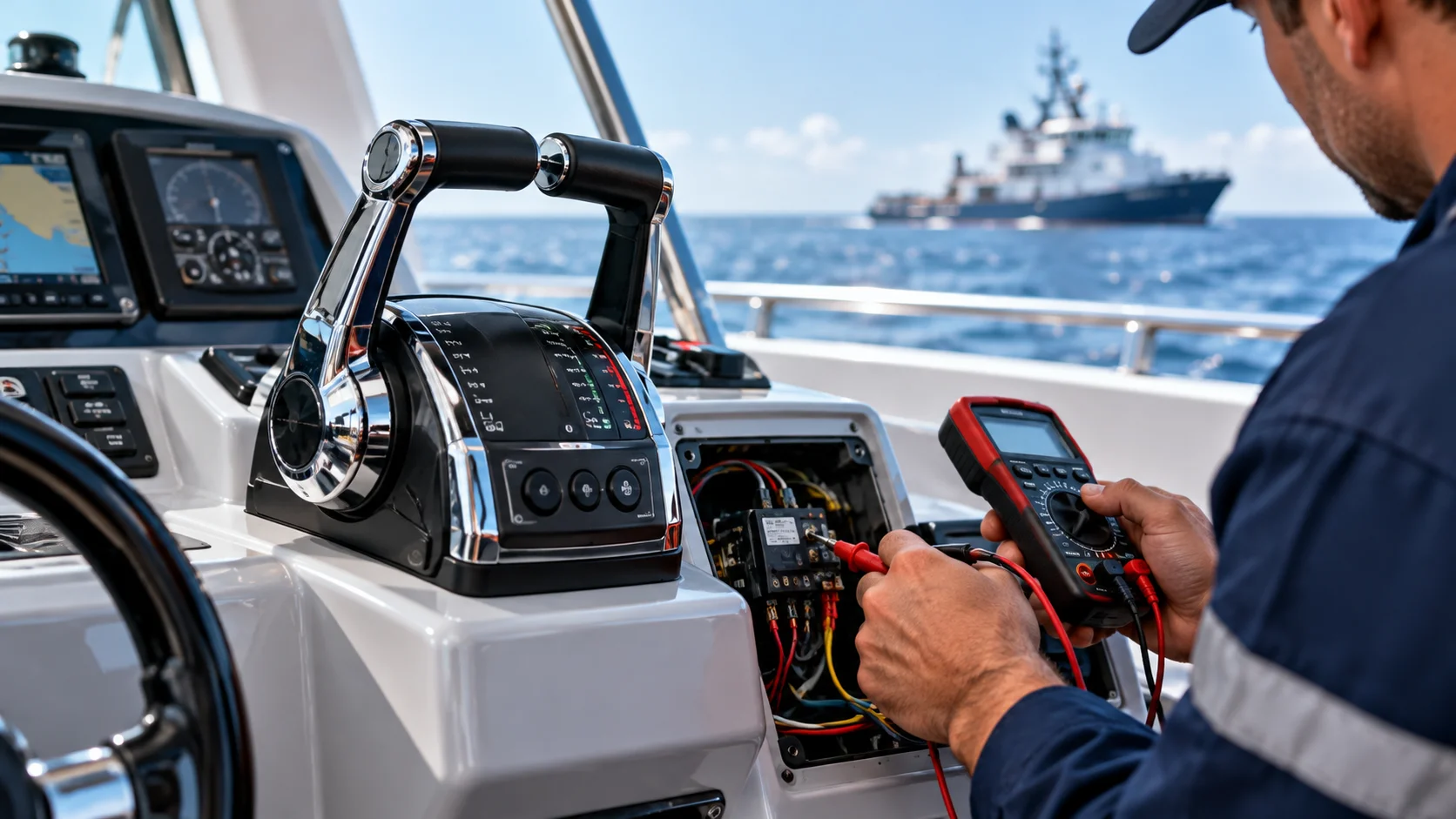
A controller failure does not always explain a fault in marine engine controls. The problem may sit between the bridge lever and the engine, where a damaged cable, unreliable signal or communication fault interrupts the command. Marine engine remote control system troubleshooting starts with identifying where the expected response breaks down.
Salt, moisture and vibration leave different clues during an inspection. Corrosion around a connector deserves attention, while recurring faults after heavy vibration may point towards loose fittings or damaged wiring. Some problems only appear under particular operating conditions, so equipment that works during a port inspection may still have an unresolved fault.
The useful evidence lies in the difference between what the operator requested and what the machinery actually did. Alarm records, controller inputs and feedback readings help establish that difference. Checking these details before ordering replacement parts gives the repair a firmer technical basis and reduces the chance of replacing a component that was never faulty.
Ship Engine Remote Control System Basics
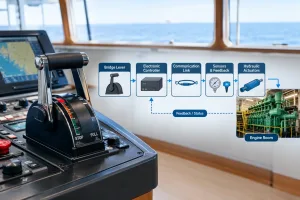
A bridge lever does not directly control engine speed. The command passes through the vessel’s control equipment before reaching the machinery that changes speed or direction. Depending on the installation, that path may involve electronic controllers, communication links, sensors and hydraulic actuators.
The equipment must also report what happens after it issues a command. An engine management controller may receive the requested setting, but the actual response can differ if an interlock prevents the action or a connected component fails to operate. Engineers need to distinguish between a command that never arrives and one that arrives but produces no expected response.
Control arrangements vary between vessels, so the equipment drawings and manufacturer’s manuals should guide the investigation. Check which station holds control authority, how the bridge transfers control to the engine room and which components handle the command. A lever that appears to work normally does not necessarily mean its signal reaches the receiving controller.
Recognise Common Marine Control Faults
A lever that moves without changing engine speed does not automatically point to a faulty controller. The input device, wiring, communication link and actuator can all affect the result. Marine remote control system faults need to be separated by where the command stops progressing..
| Observed symptom | Possible cause | First check |
| No response to lever movement | Input device, power supply or communication fault | Check alarm indications and the recorded input |
| Engine responds slowly | Communication delay or restricted actuator movement | Compare command timing with feedback |
| Bridge station cannot take control | Station selection or active interlock | Verify control authority |
| Actual speed differs from requested speed | Feedback fault or engine-side restriction | Compare requested and actual values |
| Fault appears intermittently | Loose connection, moisture or unstable supply | Review event records and inspect relevant connections |
The distinction between these symptoms matters. If the controller never registers the requested input, inspecting the actuator first is unlikely to help. When the inputs and outputs appear correct, check whether the remote control system is communicating properly with the equipment carrying out the command.
When several functions fail together, possible marine automation system faults deserve attention. Note which functions stopped working, whether their alarms appeared at the same time and whether the problem followed recent maintenance. These details can help establish whether the faults share a cause or require separate investigations.
Trace Commands Before Changing Settings
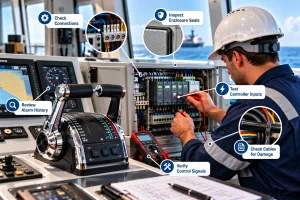
A marine engine control troubleshooting guide needs to help engineers find where a command stops reaching its destination. During vessel remote control system troubleshooting, alarm records and controller readings provide useful evidence before anyone resets equipment or changes settings.
Record the alarm code, time, active station and operating conditions. Then compare the command registered at the initiating station with the input shown by the receiving controller. If the readings differ, inspect the relevant connection or communication path. If the input matches but the expected output is missing, check the controller’s status and applicable interlocks.
Use the findings to decide what to test next:
- Save alarm details before clearing or resetting the equipment.
- Compare recorded inputs, controller outputs and available feedback.
- Perform manufacturer-approved tests at the suspected fault location.
- Record the confirmed cause, corrective work and test results.
A reset may restore operation temporarily without resolving the fault. If propulsion response or manoeuvring capability is compromised, follow the vessel’s operating and emergency procedures. Never bypass a safety interlock to test a theory.
Investigate Electrical and Signal Problems
A controller that keeps restarting may have a power problem rather than an internal defect. Damaged insulation, corroded terminals and unreliable input signals can also cause marine engine control system problems, particularly where salt deposits, moisture and vibration affect the same connections.
Check the supply against the equipment manufacturer’s specifications before considering a replacement. The wiring diagram should confirm the required voltage, grounding arrangement and signal type. If those readings are correct, examine the signals reaching the remote control system and review any irregularities recorded during operation.
The timing of a fault can help narrow the search. A problem that appears when another motor starts calls for a different investigation from one that develops after prolonged vibration. In the first case, examine the supply and possible electrical interference; in the second, inspect accessible connections, cable supports and mounting points.
Electrical testing must follow the vessel’s isolation procedures and be carried out by qualified personnel. Account for backup power supplies before opening equipment. The UK Maritime and Coastguard Agency’s marine engineering safety guidance covers electrical installations and machinery maintenance. After correcting the fault, verify the affected inputs and outputs against the manufacturer’s requirements rather than relying on a restart to confirm the repair.
Diagnose Communication and Controller Faults
Ship engine control system faults can occur even when the bridge controls appear to work normally. In a networked installation, the bridge station, controller and engine-side equipment must exchange commands and feedback through the configured communication links.
A missing command and a missing response are different problems. If the receiving controller never registers the bridge command, the communication link or associated connections need attention. If the command appears in the controller’s records but the expected output is absent, check its status and applicable interlocks instead.
The bridge display can create another complication. An engine may respond to a command while the displayed speed remains unchanged or updates late. In that case, check the feedback path before replacing a remote control system component that is already processing commands correctly.
Recent equipment changes are worth checking when communication problems begin unexpectedly. A replacement module, software update or altered configuration may affect compatibility or communication settings. Compare the installed configuration with the approved records, and retain event logs before making further adjustments. Also confirm which station holds control authority, since a station without authority may be unable to issue commands.
The marine propulsion control system must retain its approved configuration. Follow the manufacturer’s procedures and vessel authorisation requirements before changing protected settings or replacing configured components.
Inspect Hydraulic and Mechanical Components
Ship propulsion control faults do not always begin in an electrical cabinet. A valid command may reach the engine-side equipment, but a worn linkage, restricted mechanism or defective actuator may prevent the requested movement.
If the controller records the correct output but the mechanism does not reach its expected position, inspect the actuation path before replacing parts of the remote control system. This helps distinguish an electronic fault from a problem with the machinery carrying out the command.
Inspect accessible linkages, actuator connections, hoses, fittings and mounting points under the vessel’s maintenance procedures. Look for damage, leakage, loose fixings or restricted movement. Where hydraulic pressure measurements are required, use the specified test points and limits.
A gradual increase in response time may indicate developing resistance or wear. Repeated leakage around the same connection calls for investigation of the affected components rather than another clean-up. Earlier inspection notes can show whether the condition has worsened.
Make the equipment safe before inspection. Hydraulic circuits can retain pressure after shutdown, and connected machinery may move unexpectedly. After repairs, use the approved functional test to confirm the mechanism moves as commanded.
Maintain Controls for Marine Conditions
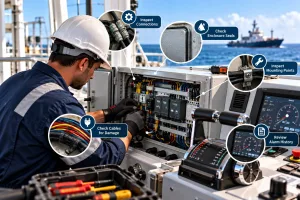
Marine remote control system maintenance should reflect the manufacturer’s instructions, the vessel’s operating environment and previous fault history. Equipment exposed to salt spray may need different inspection priorities from equipment installed in a protected space. Humidity can also challenge enclosure seals and increase condensation risk.
Maintenance findings should lead to specific action. Corrosion around a connector calls for inspecting the connection and assessing how moisture entered. If a fault returns after rough passages, examine cable supports and mounting points alongside the component itself.
A practical programme should include:
- Inspecting accessible cables, connectors, enclosure seals and mounting points for corrosion or damage.
- Reviewing recurring alarms and recording the checks performed.
- Testing station transfer and approved control functions at manufacturer-recommended intervals.
- Keeping wiring diagrams, equipment identification and configuration records current.
- Recording repairs, test results and repeat failures for later comparison.
These records matter when a fault returns. A previous work order may show that the original cause was missed, the replacement component was unsuitable, or another part was deteriorating. Accurate records also support spare-parts planning and help engineers check compatibility before ordering, reducing unnecessary replacements and avoidable waste.
Prepare for Specialist Marine Repairs
Qualified personnel can resolve some faults onboard using approved procedures. Others require specialist diagnostic tools, manufacturer-specific documentation or access to protected configuration settings. Repeated controller failures, unexplained communication errors and faults involving safety functions warrant further assessment.
Before requesting marine engine control system repair or ship remote control system repair, gather the equipment model, controller identification, alarm codes, operating conditions and tests already completed. Event logs and clear photographs of visible damage can help the service team assess the problem without repeating every initial check.
Remote engine control system diagnostics can help distinguish a controller failure from an input, communication or output problem. Confirm the equipment version and configuration before ordering replacements. Marine engine control spare parts must meet the manufacturer’s specifications for compatibility and intended use; a similar appearance does not guarantee equivalent operation.
After the repair, test command response, feedback, station operation and relevant safety functions through the prescribed commissioning procedure. Record the results and any approved configuration changes. Do not return the equipment to service simply because an alarm has disappeared. The required functions must pass their checks, and the vessel’s operating procedures must be satisfied.
Conclusion: Find the Fault Before Replacing Parts
A dependable remote control system relies on the full path between the operator’s command, controller, communication link and actuator. Comparing recorded inputs with actual responses helps engineers isolate faults, avoid unnecessary component changes and reduce repeat failures. Manufacturer-approved testing and compatible parts remain essential to a reliable repair.
Need support with marine control equipment or compatible replacement components? Contact SACRED International to discuss your vessel’s requirements and suitable marine automation equipment and spare parts.
Frequently Asked Questions
1. What causes marine engine control failures?
Common causes include unstable power, damaged wiring, communication errors, incorrect station selection and actuator problems. Salt exposure, condensation and vibration can affect a remote control system, but engineers should confirm the cause before replacing components.
2. How should engineers diagnose control faults?
Record the symptoms, review alarm codes, inspect accessible connections and compare command inputs with feedback. Manufacturer-approved diagnostic tools help establish whether a remote control system fault originates at the control station, communication link or connected equipment.
3. Why might bridge control stop responding?
Bridge control may stop responding because of a power interruption, communication failure, incorrect station selection or an active safety interlock. Check the remote control system’s displayed status and follow the vessel’s approved procedures before attempting to restore control.
4. How often should marine controls be maintained?
Maintenance frequency depends on manufacturer recommendations, equipment condition and operating environment. Scheduled inspections, functional tests and reviews of recurring alarms help identify deterioration in a remote control system before it causes an operational interruption.
5. Can faulty control components be replaced onboard?
Qualified personnel may replace certain remote control system components onboard when the correct documentation, tools and approved parts are available. Repairs involving controller configuration or safety functions may require specialist support and formal commissioning.
6. When should a marine control specialist be contacted?
Contact a specialist when approved checks fail to resolve recurring faults, communication errors remain unexplained or safety-related functions behave unexpectedly. Remote control system diagnostics, equipment details and previous test results support a more focused assessment.